Home » People » Robert Barsky

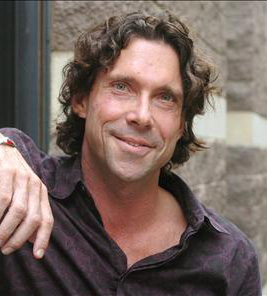
Robert Barsky


Robert Barsky, Ph.D. McGill

Professor of French and Comparative Literature
Alexander Heard Distinguished Service Professor (2011-2012)


Curriculum vitae

periodistadigital, Agencia EFE, lunes, 10 de octubre 2005
A (humorous) biographical sketch in Versus Magazine
An interview in the Vanderbilt Hustler student newspaper
A discussion in berfrois.com of Barsky's new book on Zellig Harris


Ben, Tristan, Denis, Debra, Bob, Marsha and Celeste

Recent projects

!!NEW BOOKS!!
Zellig Harris (2011) and The 'Chomsky Effect' (2009)

AmeriQuests
Quebec and Canadian Studies, including the Vandy-McGill Initiative
**Maymester! Spring 2012 in Switzerland, France and Italy!**
Robert Penn Warren Center Seminar on Literature and Law
.

Books and Publications

Zellig Harris: From American Linguistics to Socialist Zionism Cambridge; London: The MIT Press, 2011.


Interview in the New Left Project about Zellig Harris
Discussion of the Zellig Harris biography in www.berfrois.com

The Chomsky Effect: A Radical Works Beyond the Ivory Tower, Cambridge; London: The MIT Press, 2007; paperback 2009


Table of Contents and sample chapters

Edition of The Chomsky Effect for India, Pakistan, Sri Lanka and Bangladesh, Nhepal, Bhutan, published by Orient Black Swan pvt., 2009. Review in The Hindu, India’s national magazine.

The Chomsky Effect in Korean, Seoul, Window of Times Publishing Company, 2009.

The concluding chapter, translated into Czech and published on vulgo.net

Facebook page for The Chomsky Effect

Quests Beyond the Ivory Tower:  Public Intellectuals, Academia and the Media, Edited by Saleem H. Ali and Robert Barsky, a special issue of AmeriQuests, 2006.

Introduction by Ali and Barsky

Quebec and Canada in the Americas, edited by Robert Barsky, as special issue of  AmeriQuests, 2006.

Introduction by Barsky

Marc Angenot and the Scandal of History, a special issue of the Yale Journal of Criticism that features articles by Marc Angenot, Robert Barsky, Fredric Jameson, Marie-Christine Leps, Michel Pierssens, Darko Suvin. 2004.

Introduction to Marc Angenot and the Scandal of History

Workers Councils, by Anton Pannekoek. A new and revised edition, edited and with comments by Robert Barsky, interviews with Noam Chomsky, Ken Coates and Peter Hitchcock, and a republication of a seminal piece by Paul Mattick. London/SF: AK Press, 2002.

Introduction to Workers Councils including a discussion between Chomsky and Barsky

Arguing and Justifying: Assessing the Convention Refugee Choice of Moment, Motive and Host Country. Aldershot; Burlington; Sydney; Singapore: Ashgate, 2001.

Paris-SubStance-America. A special issue of SubStance devoted to French theory. 2001.

Introduction à la théorie littéraire. Quebec: Presses de l’Université du Québec, 1997.

Introduction en Français

Introduction in English

Noam Chomsky: A Life of Dissent. Cambridge; London: MIT Press, 1997, 1998.

Translations and revised editions

Noam Chomsky: Une voix discordante, translated by Geneviève Joublin. Paris: Éditions Odile Jacob, 1998. [French]
Noam Chomsky Bir Muhalifin Yaşamı. Sofia: Lege Artis, 2010 [Bulgarian]
Noam Chomsky: Libertarer Querdenker, translated by Stefan Howald. Zurich: Editions 8, 1999. [German] 
Noam Chomsky, translated by Syun Tutiya. Tokyo: Sangyo Tosho, 1998. [Japanese] 
Noam Chomsky: Una vida de discrepancia, translated by Isabel Gonzalez-Gallarza. Barcelona: Ediciones Peninsula, 2005. [Spanish] 
Noam Tsomski: He zoe enos antiphronounta, translated by Penelope Pompote. Athens: Ekdoseis Ekkremes, 2000. [Greek]  
Noam Chomsky: Una vita di dissenso, translated by M. Hough. Roma: Datanews, 2004 [Italian].  
Noam Chomsky: A Vida de um Dissidente, translated by Rosalind Moabaid. Sao Paolo, Brazil, 2005 [Portuguese].
Noam Chomsky. Seoul: Greenbee Publishers, 2000 [Korean].  
Noam Chomsky: Bir Muhalifin Yasami, translated by Dogan Kitapcilik. Istanbul, Turkey: Eylol, 2001 [Turkish].  


Constructing a Productive Other: Discourse Theory and the Convention Refugee Hearing , Amsterdam; Philadelphia: John Benjamins, 1994.

Bakhtin and Otherness . A special issue of Discours social/Social Discourse edited by Robert Barsky and Michael Holquist, 1991.

Introduction to Bakhtin and Otherness

Translation

Philosophy and the Passions: Toward a History of Human Nature, Penn State Press, 2000, Robert Barsky’s translation and introduction of Michel Meyer’s Le Philosophe et les passions (Paris: Livres de poche).

Introduction to Philosophy and the Passions

Research Areas and Selected Publications

1. Literary and Language Theory; translation; Literature and Law

2. Refugee, Border and Migration Studies

3. The Milieus of Noam Chomsky and Zellig Harris

4. Selected Translations

  • “What Can Literature do? From Literary Sociocriticism to a Critique of Social Discourse” by Marc Angenot, Yale Journal of Criticism 17.2 (Fall 2004): 217-232.
  • “A State of Social Discourse” by Michel Pierssens, Yale Journal of Criticism, 17.2 (Fall 2004): 255-262.
  • Denise Helly, “Social cohesion and Ethnic Minorities,” for the Canadian Journal of Anthropology and Sociology (2003).
  • Denise Helly, “Ethnic and National Minorities” for the Canadian Journal of Anthropology and Sociology (2002).
  • Philosophy and the Passions, a translation (with a preface, introduction and bibliography) of Le Philosophe et les Passions (Livre de Poche) for Penn State Press Literature and Philosophy Series, dir. Anthony Cascardi, 2000..
  • “Rhetoric and the Theory of Argument” by Michel Meyer. Revue Internationale de Philosophie 196.2 (1996): 325-358.
  • “The Problematological Interpretation of the Cogito: Is There a Distinctive Argumentative Structure in The Meditations?” by Michel Meyer. Revue internationale de Philosophie 195 (1996): 23-49.
  • “The Representamen, The Sign and the Abduction”, by Jean Fisette, Pierce Papers. Toronto Semiotic Circle, 1996.
  • “The Mirror, The Beaker and the Touchstone: or, What Can Literature Do For Science?” by Jean Marc Lévy Leblond, SubStance 71/72: 1 26.
  • “The Political Regulation of Cultural Plurality: Foundations and Principles,” by Denise Helly, for Canadian Ethnic Studies / Études Ethniques au Canada 25.2 (1993): 15 35.
  • [with Sydney Mintz] “Introduction” Chinese Emigration: The Cuba Commission Report. Baltimore: Johns Hopkins University Press, 1993, pp. 1 30.
  • [with Dominique Michaud] “Bakhtin and Postmodernism: An Unexpected Encounter. Notes on Jean-Paul Goude’s ‘Marseillaise’,” by Régine Robin. Discours social / Social Discourse 3.1-2 (1991): 229 232.
  • “Following the Thread,” by Marc Angenot. Science Fiction Studies, 16.2 (July 1989): 218 222.

5. Selected reviews

  • Review of Sophia A. McClennen, Ariel Dorfman: An Aesthetics of Hope. Durham and London: Duke University Press, 2010 in Modern Drama (2011), forthcoming.
  • Review of Margot Finn, Michael Lobban and Jenny Bourne Taylor, eds., Legitimacy and Illegitimacy in Nineteenth-Century Law, Literature and History. Houndsmills UK; New York, NY: Palgrave Macmillan, 2010, for New Books Online-19 (2011).
  • Review of Christine L. Krueger, Reading for the Law: British Literary History and Gender Advocacy (Victorian Literature and Culture Series). Charlottesville and London: University of Virginia Press, 2010, for New Books Online-19 (2011).
  • Review of Edward W. Soja, Seeking Spatial Justice. Minnesota: U of Minnesota P, 2010, for Le travail/Labor (2011).
  • Review of Richard A. Posner, Law and Literature, Revised and Enlarged Edition. Cambridge, MA: Harvard UP, 2009, for New Books Online 19, 2009
  • Review of Michael Welch, Scapegoats of September the 11th: Hate Crimes and State Crimes in the War on Terror, for Le travail/Labor 61 (Spring 2008): 270-272.
  • Review of Jonah Raskin, American Scream: Allen Ginsberg’s ‘Howl’ and the Making of the Beat Generation, University of California Press, 2004, for AmeriQuests 1.2, 2006.
  • Review of Open Borders: The Case Against Immigration Controls, in Journal of Refugee Studies 2001, 14, 205-7.
  • Review of Wai Chee Dimock, Residues of Justice: Literature, Law, Philosophy. University of California Press, 1997 [1996], for Literary Research 31, 1999.
  • Review of Richard A. Posner, Law and Literature, Revised and Enlarged Edition. Cambridge, MA: Harvard UP, 1998, for Literary Research 30, 1999.
  • Review of Theodore Ziolkowski, The Mirror of Justice: Literary Reflections of Legal Crises. Princeton: Princeton University Press, 1997, for Literary Research 29, 1998.
  • Review of Robin West, Caring for Justice. New York University Press, 1997, “The Limits of Caring in Justice” for Literary Research 16.32 (1999): 233-239.
  • Review of Michael Gardiner, The Dialogics of Critique: M.M. Bakhtin and the Theory of Ideology, for Slavic Review 53.1 (Spring 1994): 306-308.
  • Review of Peter Hitchcock, The Dialogics of the Oppressed. Minnesota: U of Minnesota P, 1992. for Discours social/Social Discourse 6.3-4, (1994).
  • Review of Stephen L. White, The Unity of the Self. Cambridge: MIT Press, 1991, for Discours social/Social Discourse 5.3 4 (1993): 192-194.
  • Review of M. Pierrette Malcuzynski. Entre-Dialogues avec Bakhtin, for Slavic Review 53.4 (Winter 1994): 1198-1199.
  • Review of Critical Studies II, 1 2, 1990: Mikhail Bakhtin and the Epistemology of Discourse, Ed. Clive Thomson, for Semiotic Inquiry 12.3.
  • Review of Pierre Bourdieu, Language and Symbolic Power. Harvard UP, 1981, for Modern Language Quarterly 52.4, December 1991, pp. 466-468.
  • Review of Terry Eagleton, Fredric Jameson and Edward Said, Nationalism, Colonialism, Literature. Minnesota: U Minnesota P, 1990, for Discours Social / Social Discourse 4.1 2, pp. 179-180.
  • Review of Cohan, Stevan and Linda M. Shires. Telling Stories: A Theoretical Analysis of Narrative Fiction. NY: Routledge, 1988, for Literary Research 18, pp. 16-17.
  • Review of Chamberlain, Daniel Frank, Narrative Perspective in Fiction: A Phenomenological Mediation of Reader, Text, and World. Toronto: U of Toronto P, 1990, for Literary Research 18, p.14.
  • Review of Literature, Language and Politics, Ed. Betty Jean Craige. Athens & London: U of Georgia P, 1988, for Literary Research 14 15, pp. 14-15.
  • Review of George Levine, Darwin and the Novelists: Patterns of Science in Victorian Fiction. Cambridge MA: Harvard UP, 1988, for Literary Research 13 pp. 25-26.
  • Review of Violence and Truth: On the Work of René Girard. Paul Dumouchel, Ed. Stanford: Stanford UP, 1988, for Literary Research 11, pp. 12-13.
  • Review of Buitenhuis, Peter. The Great War of Words: British, American and Canadian Propaganda and Fiction, 1914-1933. Vancouver: U of BC P, 1987, for Literary Research 11, pp. 15-16.
  • Review of Dick, Susan et al. Essays for Richard Ellman: Omnium Gatherum. Montréal: McGill UP, 1989, for Discours social/Social Discourse Vol. 2, 4 pp. 207-208.
  • Review of Morton Beiser, Strangers at the Gate: The Boat People’s First Ten Years in Canada. Toronto: University of Toronto Press, 1999 for Asian Pacific Migration Journal 9.3 2000, 387-388.
  • Review of Open Borders: The Case Against Immigration Controls. By Teresa Hayter. London; Sterling, Virginia: Pluto Press, 2000, for the Oxford Journal of Refugee Studies, 2001.
  • Review of Joe Thomas, Ethnocide: A Cultural Narrative of Refugee Detention in Hong Kong. Aldershot, UK: Ashgate, 1999 for Oxford Journal of Refugee Studies, 2000.

Courses at Vanderbilt

Maymester 2012 in Switzerland and Italy
Despite (or perhaps because of) the conservatism of the Swiss and the image of Switzerland as a place of political neutrality, banking and watch-making, the Swiss Alps have sheltered and inspired genera-tions of radical creative and political work, by a host of artists, Romantic poets and anarchists, includ-ing the likes of Wordsworth, Shelley and Byron. One reason for this is that the conservative Switzer-land is tightly guarded, and ruled in accordance with international legal instruments and laws that have made it a safe haven for persecuted persons, and a fertile ground for international organizations charged with upholding human rights. In this Maymester, Professor Robert Barsky will make this link between radicalism and creativity, safe haven and international law, by exploring institutes, specialists and natural settings in Switzerland and France. Beginning in Geneva, the students will be introduced to the international legal and non-governmental organizations that uphold international laws, notably the Red Cross and the United Nations High Commission for Refugees. For one week, students will meet with high-ranking officials from both organizations, and witness firsthand the kinds of work that is directed from the Geneva offices. While in Geneva, students will also have access to archives of work from radicals, notably Reclus, Kropotkin and Bakunin, as well as documents relating to Swiss experiments in radical reform, including the work of the Jura watchmakers. The class will then head up towards Montreux and Evian, where they will encounter the worlds of Byron, Mary and Percy Shelley and others through visits to the regions so dear to all of them, including the Chateau Chillon and the Villa Diodati. Then, on to will Mont Blanc, Chamonix and the Mont Blanc pass, where students will stay to enjoy the settings that so inspired poets and writers, most notably those of the Romantic era. Students will enjoy writing and reading poetry, and hiking in the areas where the sublime was given a name in verse. A range of other activities characteristic of Switzerland and France, including boating, skiing, and alpine exploration will complement the academic work and inspire new reflections into this sublime world.

Fall 2011
FR240 Rabelais et le Carnavalesque Dans les textes qu’on lira pour ce cours on dit que le carnaval, la fête païenne la plus célébrée dans le monde chrétien, dérape dans le sarcasme et dans la dérision de l’ordre établi, il tourne en ridicule l’autorité et le pouvoir, il brave les interdits et la morale en exaltant ces péchés capitaux que le carême voudrait exorciser. Il fait un pied-de-nez aux pisse-vinaigre et aux puritains de tous bords, il ouvre la vanne au libertinage, aux fantasmes, aux désirs refoulés. Le carnaval force l’Église à tolérer le port des masques, injures à l’idée d’un homme créé à l’image de Dieu, les festins, les danses et les rires bannis du carême. On dit aussi que le carnaval, c’est tout à la fois le mythe du combat mythologique entre le cerf et le serpent qui assure le retour du printemps après les effrois de l’hiver, et c’est aussi le moment où les cerfs perdent leurs cornes et sa fête tourne en dérision les cornes des cocus. Mais le carnaval est plus qu’un événement, d’après Mikhaïl Bakhtine, il est une manifestation de notre nature humaine qui se caractérise en partie par son désir du « carnivalesque ». Dans L’oeuvre de François Rabelais et la culture populaire au Moyen Age et sous la Renaissance Bakhtine éclaire sous un jour totalement nouveau le carnaval et l’oeuvre de François Rabelais, sur la base d’une étude approfondie de ses sources populaires, notamment le carnaval, et, donc, le vocabulaire de la place publique, les formes et images de la fête populaire, le banquet, l’image grotesque du corps, le bas matériel et corporel, et enfin les images de Rabelais et la réalité de son temps.

From Zellig Harris to Noam Chomsky. Zellig Harris deserves our attention today for no other reason than the relationships he had with seminal figures of the 20th Century, including Louis Brandeis, Albert Einstein, Erich Fromm, Nathan Glazer, Paul Mattick, Seymour Melman, Arthur Rosenberg, and dozens of others who worked with him on linguistic, political and Zionist issues. And of course anyone interested in Chomsky’s work would benefit immeasurably by studying the differences between his and Harris’s approaches to linguistics, including studies of discourse analysis and propaganda, and politics, most notably in the contrast between Harris’s socialism and Chomsky’s anarchism. In the canon of political figures, Harris fits most clearly into the kind of anti-Fascist and anti-Bolshevik Marxism of the Old Left (nicely described in the film “Arguing the World”) while Chomsky, who insists upon vocal and active resistance to repression, violence and imperialism, embodies the engaged ambitions of the New Left. In this course we’ll assess both the Chomsky and Harris milieus, and in so doing capture a significant portion of the history of 20th Century America.

Courses previously taught at Vanderbilt University

The Chomsky Effect! Hardcover 2007, paperback 2009

The Chomsky Effect, Cambridge, The MIT Press, 2008.