
Selected Faculty Publications
2025

Alex Dubilet | Political Theory Reimagined
Political Theology Reimagined centers decolonial, Black, queer, feminist, and Marxist modes of critical practice to offer a cutting-edge vision of the field that foregrounds a political theology animated by both a fascination with and a suspicion of the secular. Contributors explore how religious ideas, practices, and imaginations are inflected by anti-Blackness, patriarchy, and colonial histories; theorize the status of secularization narratives; probe the universality and translatability of conceptual abstractions; and experiment with the powers of genealogy and speculation. Traversing diverse sites, from South Asia to the Middle East to Indigenous North America, and working across diverse scales, from the national to the planetary to the cosmic, this volume models the future of political theology by pairing rigorous critique with a commitment to collective liberation. Co-edited with Vincent W. Lloyd.
 Lydi Conklin | Songs of No Provenance
Songs of No Provenance tells the story of Joan Vole, an indie folk singer forever teetering on the edge of fame, who flees New York after committing a shocking sexual act onstage that she fears will doom her career. Joan seeks refuge at a writing camp for teenagers in rural Virginia, where she’s forced to question her own toxic relationship to artmaking—and her complicated history with a friend and mentee—while finding new hope in her students and a deepening intimacy with a nonbinary artist and fellow camp staff member. A propulsive character study of a flawed and fascinating artist, Songs of No Provenance explores issues of trans nonbinary identity, queer baiting and appropriation, kink, fame hunger, secrecy and survival, and the question of whether a work of art can exist separately from its artist.
2024
Tony Earley | Jim the Boy
 Hailed as one of those rare works with the power to enchant readers of all ages, this luminous novel tells the story of a boy growing up in a small North Carolina town during the Great Depression—at a time when America itself was young and struggling to come into its own. Both delightful and wise, Jim the Boy brilliantly captures the pleasures and fears of youth at a time when America itself was young and struggling to come into its own.
“Rich, knowing, pitch-perfect. . . . A swift, lovely book.” —The New York Times
“A dazzling first novel. . . . The apparent casualness of the plot masks extraordinary craft.” —Newsweek
2023
Major Jackson | Razzle Dazzle
 Razzle Dazzle traces the evolution of Jackson’s transformative imagination and fierce music through five acclaimed volumes: his Cave Canem Poetry Prize–winning debut, Leaving Saturn (2002), which captures the spirit of resilience in the Philadelphia neighborhoods of the poet’s youth; Hoops (2006), which finds transcendence in the solemn marvels of ordinary lives; Holding Company (2010), which shifts away from narrative to explore the seductive force of art, literature, and music; Roll Deep (2015), which addresses human intimacy, war, and the spirit of aesthetic travel; and his vulnerable, philosophical latest, The Absurd Man (2020). The volume opens with three dozen new poems that erupt into full-throated song in the face of indignity and invite us into a passionate experience of the world.
2022
 Su Cho | The Symmetry of Fish
Language and lore are at the core of The Symmetry of Fish, a moving debut about coming-of-age in the middle of nowhere. With striking and tender insight, it seeks to give voice to those who have been denied their stories, and examines the way phrases and narratives are passed down through immigrant families—not diluted over time, but distilled into potency over generations. In this way, a family’s language is not lost but continuously remade, hitched to new associations, and capable of blooming anew, with the power to cut across space and time to unearth buried memories. The poems in The Symmetry of Fish insist that language is first and foremost a bodily act; even if our minds can’t recall a word or a definition, if we trust our mouths, expression will find us—though never quite in the forms we expect.
 Lydi Conklin | Rainbow Rainbow
In this exuberant, prize-winning collection, queer, trans, and gender-nonconforming characters seek love and connection in hilarious and heartrending stories that reflect the complexity of our current moment. A nonbinary writer on the eve of top surgery enters into a risky affair during the height of COVID. A lesbian couple enlists a close friend as a sperm donor, plying him with a potent rainbow-colored cocktail. A lonely office worker struggling with their gender identity chaperones their nephew to a trans YouTube convention. And in the depths of a Midwestern winter, a sex-addicted librarian relies on her pet ferrets to help resist a relapse at a wild college fair. Capturing both the dark and lovable sides of the human experience, Rainbow Rainbow establishes debut author Lydia Conklin as a fearless new voice for their generation.

Sheba Karim | The Marvelous Mirza Girls
To cure her post-senior year slump, made worse by the loss of her aunt Sonia, Noreen decides to follow her mom on a gap year trip to New Delhi, hoping India can lessen her grief and bring her voice back. In the world’s most polluted city, Noreen soon meets kind, handsome Kabir, who introduces her to the wonders of this magical, complicated place. With the help of Kabir—plus Bollywood celebrities, fourteenth-century ruins, karaoke parties, and Sufi saints—Noreen discovers new meanings for home. But when a family scandal erupts, Noreen and Kabir must face complex questions in their own relationship. The Marvelous Mirza Girls asks what does it mean to truly stand by someone—and what are the boundaries of love?

Akshya Saxena | Vernacular English: Reading the Anglophone in Postcolonial India
Against a groundswell of critiques of global English, Vernacular English argues that literary studies are yet to confront the true political import of the English language in the world today. A comparative study of three centuries of English literature and media in India, this provocative book tells the story of English in India as a tale not of imperial coercion, but of a people’s language in a postcolonial democracy. Focusing on experiences of hearing, remembering, speaking, and seeing English, Saxena reveals little-known debates and practices that have shaped the meanings of English in India and the Anglophone world, including the overlooked history of the legislation in India. She calls attention to how low castes and minority ethnic groups have routinely used this elite language to protest the Indian state. Challenging prevailing conceptions of English as a vernacular and global lingua franca, Vernacular English reimagines what a language is and the categories used to analyze it.

Allison Schachter | Women Writing Jewish Modernity, 1919-1939
In Women Writing Jewish Modernity, Schachter illuminates how interwar Hebrew and Yiddish women writers embraced the transgressive potential of prose fiction to challenge the patriarchal norms of Jewish textual authority and reconceptualize Jewish cultural belonging. Born in the former Russian and Austro‑Hungarian Empires and writing from their homes in New York, Poland, and Mandatory Palestine, the authors central to this book—Fradl Shtok, Dvora Baron, Elisheva Bikhovsky, Leah Goldberg, and Debora Vogel—seized on the freedoms of social revolution to reimagine Jewish culture beyond the traditionally male world of Jewish letters. Women writers revolutionized the very terms of Jewish fiction at a pivotal moment in Jewish history, transcending the boundaries of Jewish minority identities. Schachter tells their story and in so doing calls for a new way of thinking about Jewish cultural modernity.
2021

Rick Hilles | My Roberto Clemente
Rick Hilles’s collection begins with an invigorating homage to a childhood baseball idol and legend and ends with an appreciation to an anonymous man (possibly a retired circus clown or sideshow freak) feeding pigeons in Washington Square Park who sits as “still as any public statuary…as if any one of/our blue lives depend upon it.” And how much our lives depend on the many discovered mercies-small and large-that this poet brings to our fortunate and ultimately grateful attention in My Roberto Clemente.
“Between Hilles’s mastery of Keats’s ‘negative capability’ and his command of language both elegant yet clear and clean, these poems and their narrators move before the reader’s eyes, engage and entice us to listen to stories that, no matter how large or small, deserve to be heard and treasured.” —Ohioana Quarterly

Jessie Hock | The Erotics of Materialism: Lucretius and Early Modern Poetics
In The Erotics of Materialism, Jessie Hock maps the intersection of poetry and natural philosophy in the early modern reception of Lucretius and his De rerum natura. Revising an ancient tradition that condemned poetry as frivolous, Lucretius asserted a central role for verse in the practice of natural philosophy and gave the figurative realm a powerful claim on the real by maintaining that mental and poetic images have material substance beyond the mind or page. Hock shows that early modern readers and writers were alert to the fact that Lucretian materialism entails a theory of the imagination and, ultimately, a poetics, which they were quick to absorb and adapt to their own uses. The Erotics of Materialism demonstrates how early modern poets drew on Lucretius to explore poetry’s power to act in the world.

Anthony Reed | Soundworks: Race, Sound, and Poetry in Production (Refiguring American Music)
In Soundworks, Anthony Reed argues that studying sound requires conceiving it as process and as work. Since the long Black Arts era (c. 1958–1974), intellectuals, poets, and musicians have defined black sound as radical aesthetic practice. Through their recorded collaborations as well as the accompanying interviews, essays, liner notes, and other media, they continually reinvent black sound conceptually and materially. Through analyses of Langston Hughes’s collaboration with Charles Mingus, Amiri Baraka’s work with the New York Art Quartet, Jayne Cortez’s albums with the Firespitters, and the multimedia projects of Archie Shepp, Matana Roberts, Cecil Taylor, and Jeanne Lee, Reed shows that to grasp black sound as a radical philosophical and aesthetic insurgence requires attending to it as the product of material, technical, sensual, and ideological processes.
2020

Candice Amich | Precarious Forms: Performing Utopia in the Neoliberal Americas
Precarious Forms explores how performance art and poetry convey utopian desires even in the bleakest of times. Candice Amich argues that utopian longing in the neoliberal Americas paradoxically arises from the material conditions of socioeconomic crisis. Working across national, linguistic, and generic boundaries, Amich identifies new political and affective modes of reception in her examination of resistant art forms. She locates texts in the activist struggles of the Global South, where neoliberal extraction and exploitation most palpably reanimate the colonial and imperial legacies of earlier stages of capitalism.

Colin Dayan | Animal Quintet: A Southern Memoir
Colin Dayan meditates on the connection between her personal and family history and her relationship with animals in this lyrical memoir about her upbringing in the South. Unraveling memories alongside family documents and photographs, Animal Quintet takes a raw look at racial tensions and relations in a region struggling to change while providing a disquieting picture of a childhood accessible only through accounts of the non-human, ranging from famed Southern war horses led by Civil War generals and doomed Spanish fighting bulls to the lowly possum hunted by generations of Southerners.
A Conversation with Colin Dayan —Los Angeles Review of Books

Teresa A. Goddu | Selling Antislavery: Abolition and Mass Media in Antebellum America
Beginning with its establishment in the early 1830s, the American Anti-Slavery Society recognized the need to reach and consolidate a diverse and increasingly segmented audience. To do so, it produced a wide array of print, material, and visual media: almanacs and slave narratives, pincushions and gift books, broadsides and panoramas. Building on the distinctive practices of British antislavery and evangelical reform movements, the AASS utilized innovative business strategies to market its productions and developed a centralized distribution system to circulate them widely. Teresa A. Goddu shows how the AASS operated at the forefront of a new culture industry and made antislavery sentiments an integral part of an emerging middle-class identity.

Didi Jackson | Moon Jar
In her intimately compelling debut collection, Didi Jackson explores the life-altering and heart-rending loss of a husband to suicide. In an effort to understand this unforeseen and inexplicable act, she maps with immense candor the emotional difficulty of continuing her responsibility as a mother while attempting to regain a sense of normalcy. While grief never fully subsides, Jackson allows herself over time to rediscover love as she contends with the brutal and haunting grip of human trauma. These affirmative poems, precise and grace-begetting, exhibit an admirable self-devotion to healing and recovery that is metamorphic and cathartic. And like the Korean porcelain moon jar, these poems mark and celebrate the imperfection of existence. At once raw and vulnerable, Moon Jar shows lyric poetry to be a fundamental and permanent force for survival.
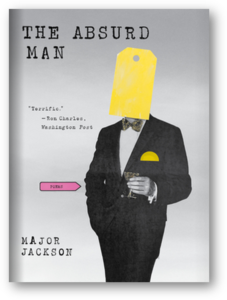
Major Jackson | The Absurd Man
Inspired by the philosophy of Albert Camus, Major Jackson’s fifth volume subtly configures the poet as “absurd hero.” With intense musicality and buoyant lyricism, The Absurd Man follows the titular speaker as he confronts the struggle for meaning in a technological world and the difficulty of social and political unity, finding refuge in intellectual and sensuous passions. At once melancholic and jubilant, Jackson considers the journey of humanity, with all its foibles, as a sacred pattern of discovery reconciled by art and the imagination.
“Erudite . . . Moments of startling linguistic play interrupt Jackson’s elegant semiformal style . . . [The Absurd Man] bring[s] us back to an existential truth that only poetry’s fierce tenderness can offer.” —New York Times Book Review

Mark Jarman | Dailiness: Essays on Poetry
The essays in Dailiness are about how a poet makes a poem. For Mark Jarman a poem results from a deliberate and conscious act. He is especially interested in the way human consciousness connects devotional prayer to poetry. In these essays he considers poems written millennia apart from Gilgamesh to George Herbert s work, from the poems of Robert Frost to those of Seamus Heaney, to his own recently-written poems and those of his contemporaries. As the poems celebrate the work of daily creation, they possess a religious aspect. In Dailiness Jarman sheds light on how poems accomplish this work.
“Gratifying . . . On page after page, Jarman takes quotidian diurnal light and transforms it into solar energy.”―Los Angeles Review of Books

Emily Lordi | The Meaning of Soul: Black Music and Resilience Since the 1960s (Refiguring American Music)
In The Meaning of Soul, Emily J. Lordi proposes a new understanding of this famously elusive concept. In the 1960s, soul came to signify a cultural belief in black resilience, enacted through musical practices—inventive cover versions, falsetto vocals, ad-libs, and false endings. Through these soul techniques, artists such as Aretha Franklin, Donny Hathaway, Nina Simone, Marvin Gaye, Isaac Hayes, and Minnie Riperton performed virtuosic survivorship and helped galvanize black communities in an era of peril and promise. Breaking with prior understandings of soul as a vague masculinist political formation tethered to the Black Power movement, Lordi offers a vision of soul that foregrounds the intricacies of musical craft, the complex personal and social meanings of the music, the dynamic movement of soul across time, and the leading role played by black women in this musical-intellectual tradition.

Lorrie Moore | Collected Stories
Collected Stories is a beautiful hardcover edition of the collected stories of one of America’s most revered and admired authors. Collected here for the first time in one volume are forty stories by Lorrie Moore—originally published in the acclaimed collections Self-Help, Like Life, Birds of America, and Bark and including three additional stories excerpted from her novels. Moore is one of America’s most revered writers, and this career-spanning collection showcases her exceptional talent for leavening tragedy with humor, for blending sorrow with subversive wit. Her keenly observed stories are peopled by a variety of lost souls—husbands, wives, lovers, tourists, professors, students, even a ghost—who are often grappling with pain or disappointment: a divorced man obsessed with self-help books, a washed-up Hollywood actress living in a hotel, a woman with a terminal illness.

Bridget Orr | British Enlightenment Theatre: Dramatizing Difference
In this ground-breaking work, Bridget Orr shows that popular eighteenth-century theatre was about much more than fashion, manners and party politics. Using the theatre as a means of circulating and publicizing radical Enlightenment ideas, British Enlightenment Theatre demonstrates that plays made passionate arguments for religious and cultural toleration and voiced protests against imperial invasion and forced conversion of indigenous peoples Europeans. Irish and labouring-class dramatists wrote plays, often set in the countryside, attacking social and political hierarchy in Britain itself. An unexplored aspect of early eighteenth-century theatre is its connection to the Freemasons, who were pervasive as actors, managers, prompters, scene-painters, dancers and musicians, with their own lodges, benefit performances and particular audiences. In addition to promoting the Enlightened agenda of toleration and cosmopolitanism, freemason dramatists invented the new genre of domestic tragedy, a genre that criticized the effects of commercial and colonial capitalism.

ZZ Packer | “The Empty Facts of the Breonna Taylor Decision”
“Those seeking justice for Breonna Taylor’s death were denied it on Wednesday, when a Kentucky grand jury refused to charge any of the officers who shot at her with murder or manslaughter. Taylor, a twenty-six-year-old E.M.T., had finished back-to-back shifts and was dozing off with her boyfriend, Kenneth Walker, when three Louisville Metro Police Department officers, who were dressed in plain clothes, knocked on her door and then broke it down with a battering ram Her boyfriend shot in the direction of the threat—toward the door. The three policemen proceeded to empty more than thirty rounds into Taylor’s apartment, killing her. . .” Read the full story in the New Yorker.

Rachel Teukolsky | Picture World: Image, Aesthetics, and Victorian New Media
Many visual media that we take for granted today were in fact invented in the nineteenth century. New technologies led to the creation of new media such as the illustrated newspaper, the cheap caricature cartoon, the affordable illustrated book, the portrait photograph, and the advertising poster. Though these objects might seem like throwaway ephemera, Picture World argues that they were crucial parts of nineteenth-century everyday life. Studying these ubiquitous pictures in fact helps us to revise common understandings of key aesthetic concepts for the century—terms such as character, realism, illustration, sensation, the picturesque, and decadence. The Age of Paper might seem to be drawing to a close, but Picture World tracks nineteenth-century media effects into the present day, from the portrait albums of Facebook to the illusionistic otherworlds of 3D films.
Jonathan Lamb | The Routledge Handbook of Reenactment Studies: Key Terms in the Field (Routledge Handbooks)
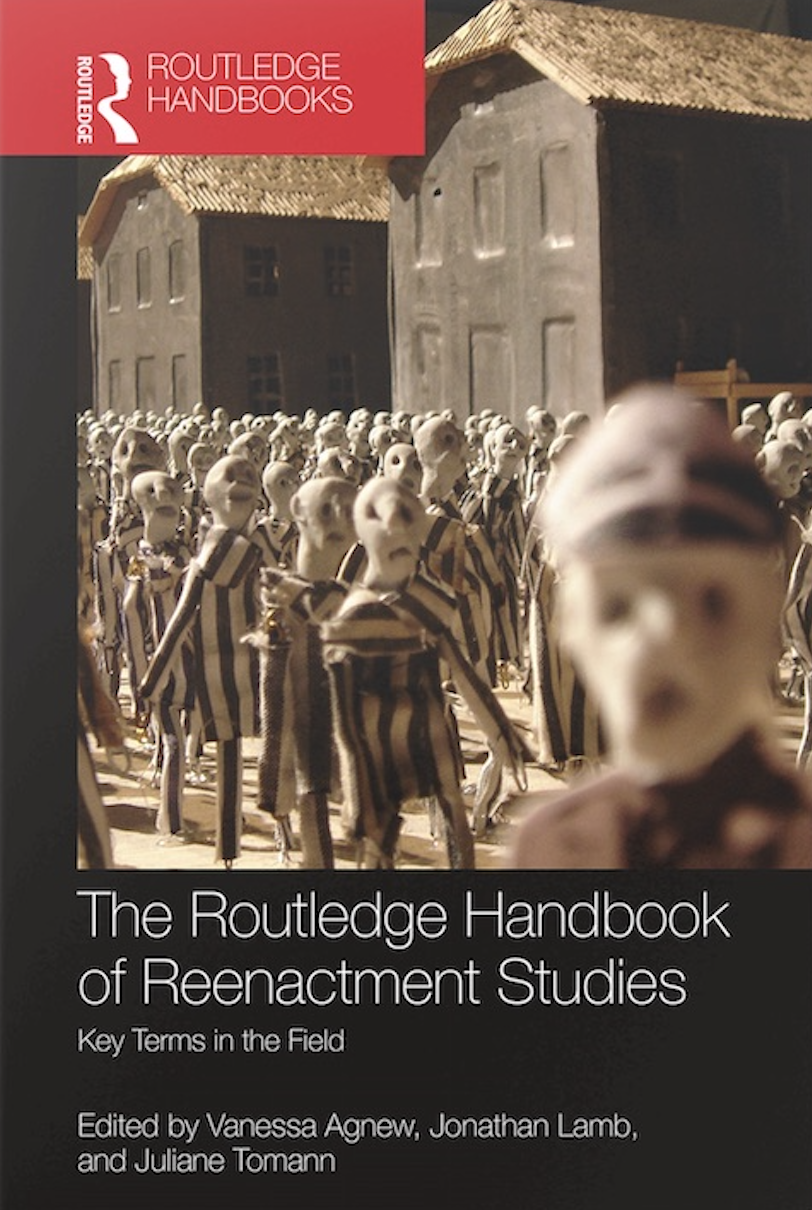
The Routledge Handbook of Reenactment Studies provides the first overview of significant concepts within reenactment studies. The volume includes a co-authored critical introduction and a comprehensive compilation of key term entries contributed by leading reenactment scholars from Europe, North America, and Australia. Well into the future, this wide-ranging reference work will inform and shape the thinking of researchers, teachers, and students of history and heritage and memory studies, as well as cultural studies, film, theater and performance studies, dance, art history, museum studies, literary criticism, musicology, and anthropology.
Kate Daniels | In the Months of My Son’s Recovery
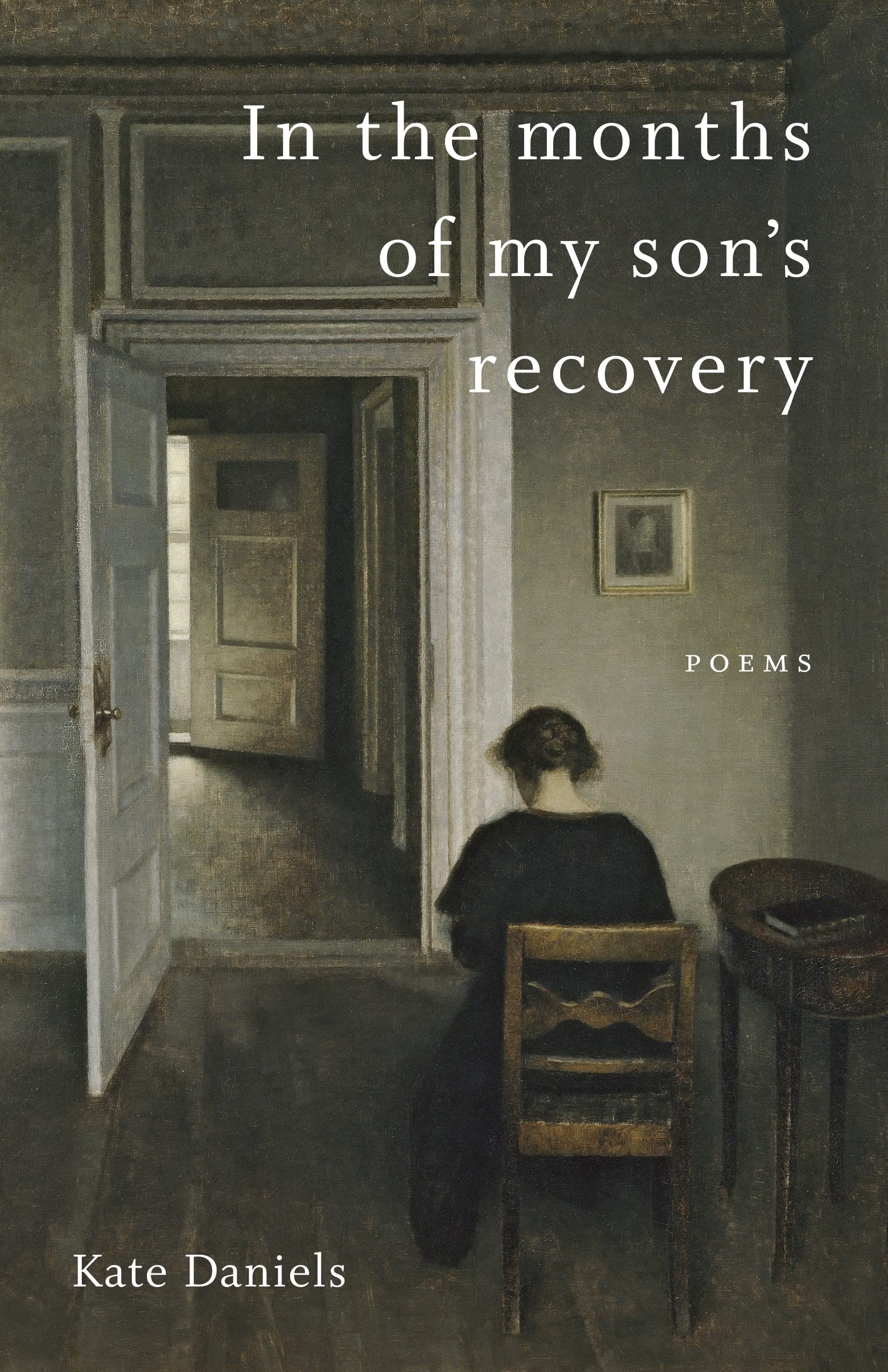 The poems of In the Months of My Son’s Recovery inhabit the persona of a woman whose grown child is in recovery from drug addiction. With clear perception and precise emotional tones, Kate Daniels explores recovery experiences from multiple, evolving points of view. These intimately voiced, often harrowing poems reveal the collateral damage that addiction can inflict on the families and friends of people with Substance Use Disorder in addition to the primary damage sustained by addicts, themselves. Offering bold descriptions of medical processes, maternal love, and the potential for hope as an antidote to despair, this timely collection contributes to our understanding of the many crises at the heart of the opioid epidemic.
Colin Dayan | In the Belly of Her Ghost
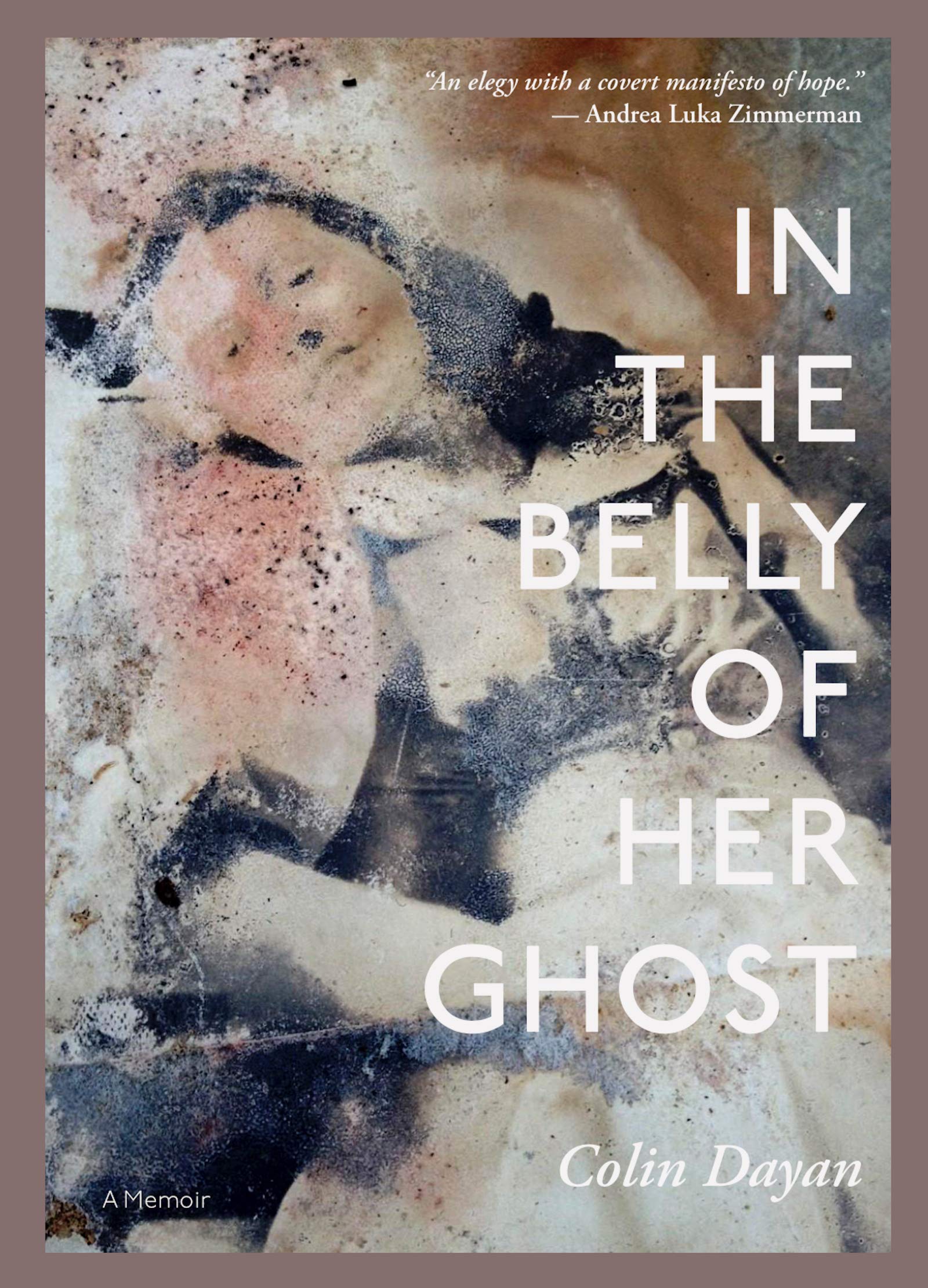 “Colin Dayan has one of the most original minds in America and also one of the fiercest. Here for the first time she turns her rigorous intellect toward her own life, onto her vexed relationship with her mother and subsequent suffering ― and she does so with her usual uncompromising clarity. It’s rare for such a tormented work to be so masterful. In the Belly of her Ghost is not exactly an easy read, but it’s also very hard to put down.”
— Madison Smartt Bell
Lynn Enterline | Elizabethan Narrative Poems: The State of Play
 This volume traces dynamic conversations that took place in narrative verse in London in the 1590s when Shakespeare and a coterie of similarly educated dramatists, poets, and lawyers published erotic minor epics in response to one another. Putting Venus and Adonis and The Rape of Lucrece into dialogue with minor epics written by Shakespeare’s contemporaries, these chapters explore humanism’s unintended consequences while drawing attention to the complex connections among Latin pedagogy, sexuality, masculinity, and vernacular poetic invention.
Amanda Little | The Fate of Food: What We’ll Eat in a Bigger, Hotter, Smarter World
 In this fascinating look at the race to secure the global food supply, environmental journalist and professor Amanda Little tells the defining story of the sustainable food revolution as she weaves together stories from the world’s most creative and controversial innovators on the front lines of food science, agriculture, and climate change.
Lorraine Lopez | Postcards from the Gerund State
 “Lorraine López has done it again. With singular wit and humor, she has gifted us with stories that probe the meaning of art and the realities of being an artist, a woman, and a caregiver. Postcards from the Gerund State is hilarious, heartbreaking and memorable.”
— Daisy Hernández, author of A Cup of Water Under My Bed