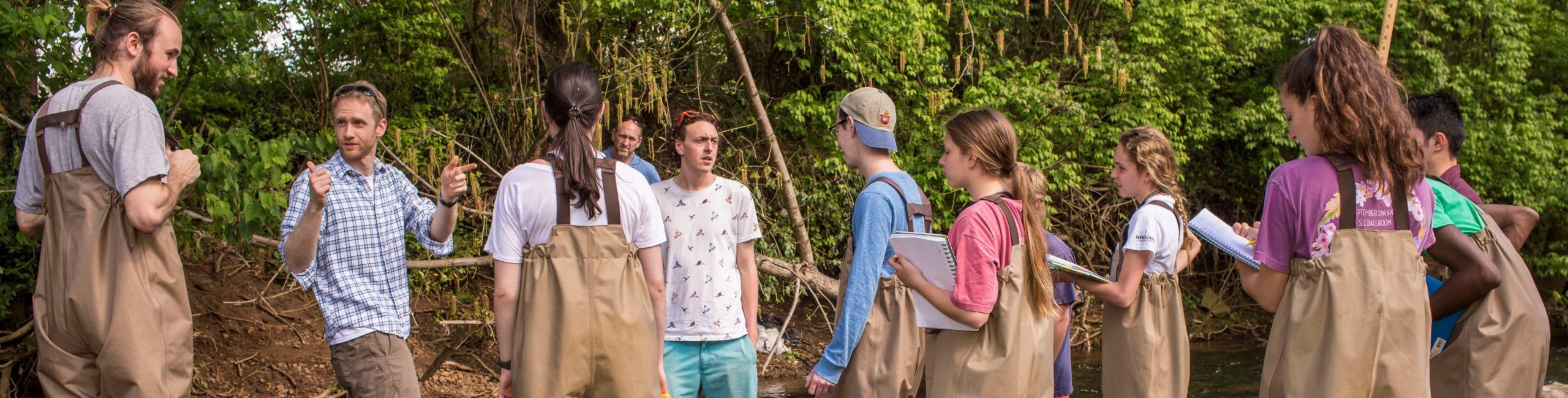
Why Earth and Environmental Sciences?
Students studying Earth and environmental sciences develop a deep understanding of the geological, environmental, and ecological aspects of our Earth, and how they affect and are affected by human interactions. In this interdisciplinary program, students can explore both general and specialized topics and have access to diverse research opportunities, preparing them to succeed in a range of professional pathways.
Our students gain the following valuable proficiencies:
Interconnectivity of our Dynamic Planet
Students explore the mechanisms that drive Earth’s constant change across global icehouse and greenhouse conditions, scaling down to the shorter-term dynamics of ocean, atmosphere, landscape, and ice-sheet variability, all impacting life and society on our planet.
Scientific Literacy
Courses use an inquiry-based approach to help students cultivate systems-level, interdisciplinary thinking across broad scales of time and space, learning the research methods, data analysis, and project design to plan, conduct, communicate, and critically evaluate Earth and environmental science investigations.
Broad Perspectives
Students learn deep-time perspectives about the diversity and evolution of life and the natural systems that shape and maintain it, as well as modern applications to humans, ecology, conservation and the sustainable use of Earth’s natural resources.
Effects of Natural and Environmental Hazards
Students learn how the interaction of Earth’s dynamic surface processes and intense human activities lead to growing risk and impacts from recurring geohazards including storms, floods, fire, volcanoes, and climate variability that affect the lives, economy, and infrastructure of our communities.
Quantitative Methods and Interdisciplinary Problem Solving
Students are exposed to a variety of field, laboratory, computational, and analytical methods that provide marketable job skills for diverse career pathways and cultivate the ability to generate innovative solutions to complex environmental problems using the perspectives and tools of multiple disciplines.