Why Biological Sciences?
Students studying biological sciences gain a combination of scientific expertise, analytical ability, and real-world problem-solving skills. Through coursework and independent research, graduates are prepared for success in research, healthcare, biotechnology, education, and more.
Students gain the following key proficiencies:
Integrative Biological Understanding
Build a deep understanding of life from molecules to ecosystems and learn to connect concepts across all levels of biology. This is developed through courses such as core lecture courses in genetics, cell biology, evolution, physiology, biochemistry, and upper-level electives that synthesize knowledge across systems.
Experimental Design and Laboratory Skills
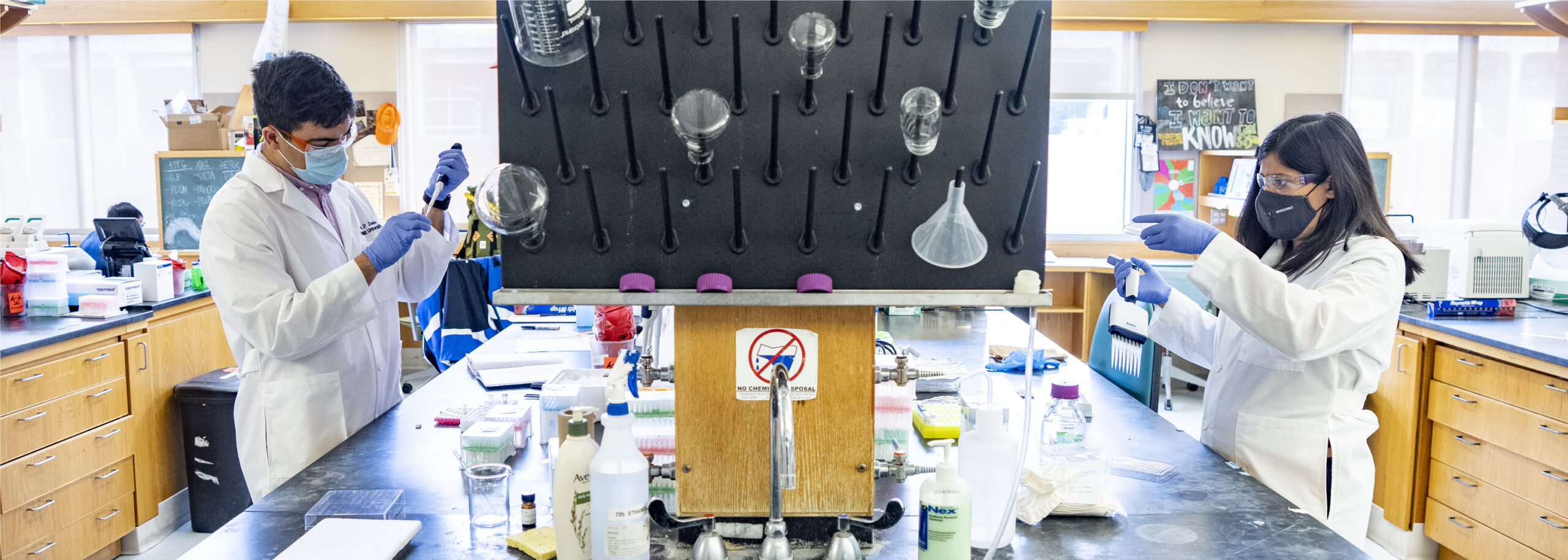
Gain hands-on experience designing experiments, applying modern lab techniques, and interpreting data with precision. This is developed through introductory and advanced laboratory courses and independent study in faculty research labs.
Quantitative and Data Analysis Skills
Develop strong analytical and computational skills for exploring biological data and drawing evidence-based conclusions. This is developed through courses in biostatistics, bioinformatics, and computational biology; and research projects requiring data management and analysis.
Critical Thinking and Scientific Problem-Solving
Develop skills of scientific analysis—evaluate evidence, synthesize information from the literature, and design creative solutions to biological questions. This is developed through reading- and discussion-based seminars, upper-level electives, and independent research emphasizing data interpretation.
Communication and Collaboration
Communicate scientific ideas clearly in writing and oral presentations and work effectively as part of research teams. This is developed through group-based lab courses, research symposia, senior seminars, work within laboratory research groups, and research-for-credit courses.
Professionalism and Research Ethics
Demonstrate integrity, responsibility, and respect for ethical standards in scientific research and professional practice. This is developed through quantitative and statistics courses, responsible conduct of research training, and mentored independent research experiences.