Interview with Obianuju Mbamalu, Class of 2005
From Classroom to Clinic
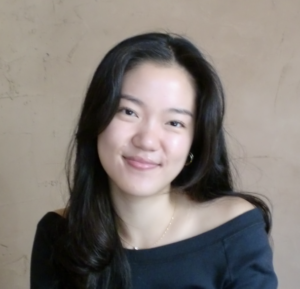
By Christina Kim
When I talked with Dr. Obianuju Mbamalu, who goes by Dr. Uju for short, I was struck by how warm and easy she was to speak with. Dr. Uju is an endodontist practicing in the Miami–Fort Lauderdale area, but before dental school, she received her Bachelor’s degree in Sociology with a minor in Women and Gender Studies (WGS) from Vanderbilt University in 2005. Going into the conversation, I was curious to discover the ways in which Dr. Uju applied the concepts she learned in her WGS courses two decades later. Graduating nearly 20 years after Dr. Uju in a heated political climate that posed various challenges to the Gender and Sexuality Studies (formerly WGS) department, I also hoped to learn more about the ways in which I’m privileged as a student to engage with peers, professors and literature in these courses.
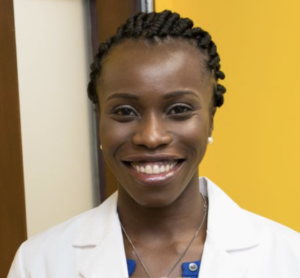
We began with her decision to study Sociology and WGS. When I asked what drew her to those fields, she didn’t hesitate. “Honestly? They made me who I am today,” she said. “Every patient I treat, I’m thinking about what’s going on in their life. Nothing is just biology. Nothing is just teeth.”
She leaned back in her chair, continuing “If someone comes in with dental trauma, I’m thinking about their circumstances. Family structure. Socioeconomic status. What pressures they may be under. WGS taught me to how to make nuanced clinical decisions. Sociology taught me context.”
Her face lit up when I mentioned that I’m majoring in Biochemistry. I told her, half-jokingly, that I don’t get much practice expressing empathy through STEM-heavy courses. She laughed and said, “Oh you definitely won’t. Cells and atoms and mechanisms—there are no feelings in any of that!” She pretended to tap a textbook on her desk and added, “This is why everyone should have a humanities requirement. I swear it makes you a better doctor.” For a moment, we sat in that shared understanding: loving science but craving something human alongside it.
When our conversation shifted to her time at Vanderbilt, it surprised me how vividly she remembered certain details of her undergraduate life. She told me about volunteering for a sexual assault call line. “It opened my eyes. The amount of sexual violence happening in Nashville, even on campus… it was overwhelming at times.” Her tone softened. “But you also learn so much about trust. About why people don’t come forward. You learn to listen.”
Then, almost out of nowhere, she laughed and said, “Do they still offer those self-defense classes in the basement of Towers?” She laughed at the surprise and intrigue on my face. “The last class, needed to pass and graduate from the program, was scary.
We had this final simulation where you walk into a room blindfolded, and someone attacks you. You’re supposed to use what you learned, but honestly? I was terrified, even though I had prepared and trained for it. I passed, but barely.” She laughed again, remembering it in a fond, almost embarrassed way.
As we talked more about her professional life, some of the levity faded. She reflected on some of the challenges she faces as a Nigerian woman in a medical specialty dominated by white men. “I always introduce myself explicitly as the doctor,” she said. “Because if I don’t, people assume I’m the assistant. Or the hygienist.” She rolled her eyes the way someone does when recounting something both familiar and exhausting.
“I’ve had patients ask when the ‘real doctor’ is coming. While I’m literally holding the X-rays.” But she didn’t linger on bitterness. Instead, she took a breath and said, “It made me empathetic in a different way. When you’ve been dismissed, you recognize it instantly in someone else. So I advocate harder for patients that have had similar experiences of not being taken seriously. I listen better. I think it keeps me grounded.”
At the end of our call, I explained the inspiration behind this project: the threats made against the Gender and Sexuality Studies department and the resulting move of faculty to the inconspicuous Bryan building. As I detailed these recent events, I watched Dr.
Uju’s expression flicker with anger first, then disbelief. “That is unacceptable,” she said. But when I mentioned that students were planning to decorate the empty walls with posters about alumni accomplishments, she brightened. “You should build a digital display!” she suggested enthusiastically. While I didn’t have the heart to explain that Bryan’s technology does not quite allow for that, I appreciated her faith in our resourcefulness.
Hearing Dr. Uju speak about her work and experience, filled with both painful and empowering moments, made me feel connected not only to her, but to the legacy of the department I’m part of now. I left our conversation hoping that the empathy and critical thinking I’m developing in my GSS courses will stay with me just as long, shaping the way I approach patients, colleagues, and the world long after I graduate.