Film Theory and Visual Culture Seminar
The Film Theory and Visual Culture Seminar fosters dialogue among faculty and graduate students interested in film, visual culture, literature and media studies, as well as in philosophies of perception, aesthetics and critical theory, the politics of technology, and the history of vision. Each semester we host scholars, media-makers, and artists from leading film and media programs (and adjacent fields), as well as scholars from our own Vanderbilt community. See our line-up of speakers below and please join us for the conversation! To see a list of previous speakers, please click here. For more information about upcoming programming, click here.
Sign up for the Film Theory and Visual Culture mailing list.
Spotlight Seminars

Homay King (Bryn Mawr) “Better Living in Eichlerville: California Modernism’s Influence on Apple”
Bio: Homay King is Professor and Chair on the Marie Neuberger Fund for the Study of the Arts in the Department of History of Art and Program in Film Studies at Bryn Mawr College. She is the author of Lost in Translation: Orientalism, Cinema, and the Enigmatic Signifier, and Virtual Memory: Time-based Art and the Dream of Digitality, both from Duke University Press. Her work has been published in Afterall, Afterimage, Discourse,Film Quarterly, JCMS, October, and elsewhere, including the Metropolitan Museum of Art’s catalogue for China Through the Looking Glass and the Whitney Museum of American Art’s The Andy Warhol Film Catalogue Raisonné, 1963-1965. Her current book project, Go West: A Mythology of California’s Silicon Valley, was awarded an Ailsa Mellon Bruce Visiting Senior Fellowship at the Center for Advanced Study in the Visual Arts at the National Gallery of Art. She is a member of the Camera Obscura editorial collective.

Friday, February 13, 10 am- 12 (noon) Robert Penn Warren Center for the Humanities
Susan Scott Parrish (University of Michigan) “Horace Pippin and the Historical Medium of Wood”
Abstract: In this talk, Parrish will focus upon Horace Pippin (1888-1946), a self-taught modernist painter and “pyrographer” who incorporated the wood grain from board supports into a number of his most significant paintings. A decorated veteran from the French campaign of World War One who witnessed extensive forest destruction in France, Pippin first depicted on paper the intertwined precarity of life and of woodlands under modern warfare. Working in Pennsylvania as an artist after the war, Pippin turned to wood as his signal medium to represent plantation and abolitionist history, Black outdoors recreation and indoors family life. The wood boards hewn out of trees but still bearing the trees’ own histories in their grain, became for him the means of visually articulating other histories: of creatures, and families, and nations. I will set this analysis of Pippin’s burnt-wood paintings within the broader question of how the American Age of Wood and African American experiences overlapped from 1800 through the 1940s, a connection thus far understudied by cultural and environmental historians.
Bio: Scotti Parrish is the Valerie Traub Collegiate Professor in the Department of English at the University of Michigan. In her research and teaching, she addresses how American environments and human categories and experiences (of race and citizenship) have been co-created since the beginning of European colonization. To understand these processes, she has considered an array of media, from conversations, specimen gifts, Vaudeville comedy, and film to the female Opossum and the Mississippi River. She has written American Curiosity: Cultures of Natural History in the Colonial British Atlantic World (2006), The Flood Year 1927: A Cultural History (2017), co-edited The Cambridge Companion to American Literature and Environment and edited the Norton Critical Edition of William Faulkner’s Absalom, Absalom! She is at work on a book provisionally titled Out of the Wood Work: American Forests and Black Cultures, 1776-1940. She is Chair of the Michigan Society of Fellows.

Friday, April 10, 10 am- 12 (noon). Robert Penn Warren Center for the Humanities
Abstract: In this era of climate disturbance, how do we decipher genres produced by increasing displacement and unhousing? How do we understand documents of loss? In this talk, I read lists of objects confiscated during sweeps of unhoused encampments—seizure medication, a thick coat, a Ziplock bag full of tampons, a clean pair of socks, Pampers, a Social Security card—in light of the literary history of the ode. Moving from Keats and Neruda to present heatwaves and Grants Pass vs. Johnson, I argue that these missing things are freighted with the kind of value best expressed in an ode. Their absence increases environmental risk, leaving unhoused residents of a city exposed to extreme temperatures, discomfort, and illness. But their absence also wrenches apart memories and meaning. Framing descriptions of these missing things in relation to the ode allows their loss to fully register, transforming a bureaucratic catalogue into poetic significance.
Bio: Sarah Dimick is an Assistant Professor of English at Northwestern University, jointly appointed in English and the Environmental Policy & Culture Program. Her research, based in Anglophone literatures of the 20th and 21st centuries, focuses on literary portrayals of climate change and environmental justice. Her first book, Unseasonable: Climate Change in Global Literatures, was published by Columbia University Press in 2024 and short-listed for the Association for the Study of the Arts of the Present Book Prize. She co-edits the University of Virginia Press’s Under the Sign of Nature series.
Fall 2025
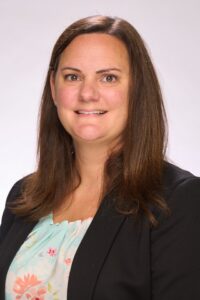
Mariah Kramer (Cinema and Media Arts, Vanderbilt University)
Friday, September 5th, 2:00 – 4:00 P.M. at the Robert Penn Warren Center for the Humanities
“Meeting Shirley: Reclaiming Memory Through Film”
Presentation, screening, and discussion of Shirley (2025, 9 min, dir. Mariah Kramer)
In this presentation, filmmaker and educator Mariah Dunn Kramer shares the deeply personal journey behind her short film Shirley, a work born from archival discovery and emotional excavation. Rooted in family history, the film centers on a single reel of 8mm footage—labeled “1949”—that unexpectedly revealed moving images of Mariah’s maternal grandmother, who passed away when Mariah’s mother was just nine years old.
As both a new mother and a filmmaker, Mariah reflects on the profound impact of witnessing Shirley come to life on screen for the first time. Through this moment, she explores themes of generational memory, grief, and the transformative power of visual storytelling. The presentation will dig into the process of working with analog media, the ethics of representing family history, and the emotional resonance of reclaiming lost narratives.
Bio: Mariah Kramer is a Senior Lecturer and Director of Undergraduate Studies in Cinema and Media Arts at Vanderbilt University, with a passion for storytelling that stretches far beyond the classroom. A co-founder of UpTilt Film Fest, Mariah is also a proud board member, dedicated to supporting women’s voices in film. When she’s not teaching or giving back to the film community, she makes her own mark as an independent filmmaker. She’s been fortunate to have her work screened at festivals across the country, from Bend Film Festival to Cucalorus Film Festival, with her short documentary This Is My Home Now even making its premiere on PBS and the World Channel.
Friday, September 26, 2:00-4:00 pm
Teaching Practicum with Jack Crawford, Huan He, and Scott Juengel
Please join us for a pedagogy workshop. We will begin with flash-talks by three Vanderbilt faculty and then open the floor for a wider conversation about teaching across media forms and their disciplines.
Jack Crawford (History of Art & Architecture, Vanderbilt): “Analyzing Live Performance.”
Bio: Jack Crawford is a Senior Lecture of History of Art & Architecture at Vanderbilt University. She holds a PhD in Art History from The Graduate Center CUNY and teaches courses in modern and contemporary art with a specialization in queer and feminist performance. Her current book project theorizes and historicizes an aesthetic of “queer maximalism” in US-based performance since the 1960s.
Huan He (Department of English, Vanderbilt): “Playing with Interactive Media”
Bio: Huan He is an Assistant Professor of English at Vanderbilt University. He is writing a book currently titled The Racial Interface: Informatics and the Asian American Technological Imagination. His research appears in Configurations, College Literature, Media-N, Just Tech, and elsewhere. He is a co-author of Technoskepticism: Between Possibility and Refusal (Stanford UP, 2025) and writes poems, which appear in Poetry, Sewanee Review, A Public Space, and other venues.
 Scott J. Juengel (Department of English, Vanderbilt): “Thinking Between Literature and Film.”
Bio: Scott J. Juengel is Associate Professor of English at Vanderbilt University. He works in the history and theory of the Anglophone novel form, as well as narrative theory more generally. In addition to twice serving as a Director of the Program in Cinema & Media Arts, he has taught classes on “Billy Wilder and Midcentury Cultural Criticism,” and “Art in the Age of Malaise: The 1970s in Literature and Cinema.”
Friday, November 7, 3:00-4:00 pm
Jodi Byrd (University of Chicago), “Indigenomicon: American Indians, Video Games, and the Structures of Dispossession”
This joint meeting with the Indigenous Studies Seminar will take place at the RPW Center, and Dr. Byrd will join virtually (on Zoom).
Friday, December 5, 2:00-4:00 pm, Robert Penn Warren Center for the Humanities
 Jennifer Fay, (Department of English and Cinema & Media Arts, Vanderbilt University)
“The Sincerity Threshold and The Media Theory of Muhammad Ali”
Abstract: From the mid 1960s through the mid 1970s, sincerity emerged as a literary and philosophical concept in transition and a seemingly fixed legal and racially charged standard of religious self-presentation where the US military draft and conscientious objector status were concerned. Muhammad Ali is the most famous conscientious objector in US history and one of the most intensely surveilled and scrutinized petitioners. From 1967 to 1971, Ali had to manifest his “sincere belief”—had to make his belief in the Nation of Islam believable—in press conferences, films, and talk shows, in the boxing ring, on the street, and in the court of law.
What does it mean to be sincere, to be sincerely religious, and to appear as such across media platforms? What is the relationship between inner belief, the media of appearance, and American conventions of religious comportment? A media theory of religious sincerity in this period is a media theory of Muhammad Ali. Connecting Ali’s trials of sincerity to the films of William Greaves, including his documentary of the 1971 Ali-Frazier World Heavyweight Championship, The Fight, and Greave’s earlier docudrama Symbiopsychotaxiplasm (1967), this presentation explores the vicissitudes of total coverage alongside the high-stakes, racialized drama of sincere self-theatricalization.
Bio: Jennifer Fay is the Gertrude Conaway Vanderbilt Professor of Cinema & Media Arts and Professor of English at Vanderbilt University. Her research and teaching are broadly concerned with transatlantic film and media theory, environmental criticism (including critical Anthropocene studies), and the relationship between aesthetics and politics. This talk is part of newish book project with the working title “Sincerity and the Media of Appearance.”