Alumni
Our graduate program alumni go on to have successful careers in a wide variety of areas. Read about the accomplishments of some of our students who have received our Distinguished Alumnus Award.
Distinguished Alumni
Dan Felleman
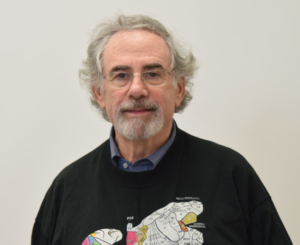 2025 Award Winner
Daniel Felleman received his PhD from Vanderbilt in 1982. He is Professor at the McGovern UT Medical School- Houston. His lab is focused on understanding the functional organization of cortical areas, functional modules, and local circuits that underlie pattern, color, and object discrimination in the primate visual system. His article on the “Distributed hierarchical processing in the primate cerebral cortex” with Van Essen has been cited more than 10,000 times.
Jenn Richler
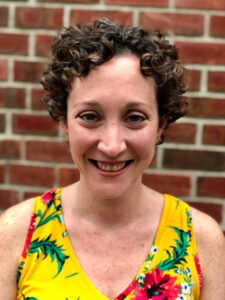 2023 Award Winner
Jenn Richler completed her PhD at Vanderbilt University, Nashville, TN, USA, where her research focused on face and object perception and recognition, learning, attention and memory. She continued at Vanderbilt as a post-doctoral research associate, during which time she also served as an Associate Editor for the Journal of Experimental Psychology: General and as a writer for the American Psychological Association. Jenn joined Nature Climate Change and Nature Energy in 2016 as a Senior Editor handling manuscripts that spanned the behavioural and social sciences, including psychology, sociology, behavioural economics, political science and human geography. Following a brief stint as a Senior Publishing Manager working to develop editorial and publishing strategy for the social sciences across the Nature Portfolio, Jenn returned to her psychology roots as the launch Chief Editor of Nature Reviews Psychology in 2021.
Ken Catania
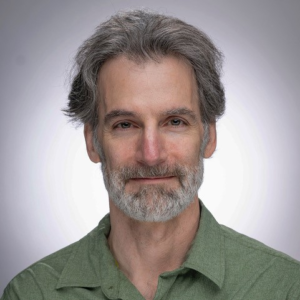 2021 Award Winner
Kenneth C. Catania is a biologist and neuroscientist teaching and conducting research at Vanderbilt University in Nashville, Tennessee. As an undergraduate, Catania worked as a research assistant at the National Zoo in Washington D.C. while attending the University of Maryland, College Park. In 1989, he received a BS in zoology from the University of Maryland. He received his Ph.D. (1994) in neurosciences from the University of California, San Diego and he did his post-doctoral work with Jon Kaas at Vanderbilt University before joining the Vanderbilt Biological Sciences faculty in 2000. He is currently a Stevenson Professor of Biological Sciences. He studies animal sensory systems, brain organization, and behavior in diverse species.
Bart Anderson
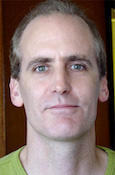 2020 Award Winner
Bart Anderson is a professor of Psychology at the University of Sydney. His work is aimed at explaining why things look the way they do. Therefore, his main area of research focuses on understanding perception, especially visual appearance, including perceptual organization, segmentation, grouping, and the recovery of surface attributes (color, material composition, shape, etc.).
Bart Anderson received a PhD from Vanderbilt University in 1990. After postdoctoral fellowships with Ken Nakayama at Harvard University and Bela Julesz at Rutgers University, he worked at MIT until 2003 before taking a job at the University of New South Wales, Australia. He has been the recipient of fellowships from the Australian Research Council since taking up his current Professorial appointment at the University of Sydney in 2008.
Duje Tadin
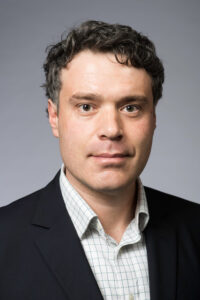 2019 Award Winner
Duje Tadin is a Professor of Brain and Cognitive Sciences, Ophthalmology, Neuroscience and Vision Science at the University of Rochester. He has been the Chair of the Department of Brain and Cognitive Sciences from 2019 to 2024, currently serving at the interim dean of the School of Arts and Sciences. Duje studies the mechanisms of human perception and cognition, with areas of focus in motion perception, cognitive and perceptual learning, adaptation, multisensory interactions, virtual reality, and binocular vision. His research covers both neurotypical and clinical groups, including cognitive aging, stroke, autism, concussion, corneal disease, low-vision, and schizophrenia.
Steve Manuck
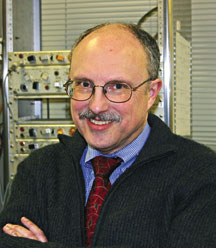 2013 Award Winner
Steve Manuck received his PhD at Vanderbilt and is currently Distinguished Professor in the Department of Psychology at the University of Pittsburgh. He received several awards including one for Outstanding Contributions to Health Psychology Award from the American Psychological Association. He is a leading figure in cardiovascular behavioral medicine, known for linking psychosocial traits, stress physiology, genetics, and brain systems to cardiometabolic health.
Mriganka Sur
2012 Award Winner
Mriganka Sur finished his Ph.D. with Jon Kaas of the psychology department in 1978, did postdoctoral research at S.U.N.Y. Stony Brook, and became an assistant professor of neuroanatomy at Yale in 1983. He became associate professor in the Department of Brain and Cognitive Sciences at MIT in 1992, where he continued as full professor (1993) and department chair (1997-2014). He is now Director of the Simons Foundation Initiative on Autism and the Brain, at MIT. He has received many awards including election to the National Academy of Sciences (India), the Royal Society (UK) and the American Academy of Arts and Sciences (USA). He has well over 200 research publications on brain development, organization, plasticity, and disorders.
Leah Krubitzer
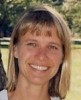 2010 Award Winner
Leah Krubitzer finished her Ph.D. with Jon Kaas in the department of psychology in 1989. After postdoctoral training at the Vision, Touch, and Hearing Research Centre, University of Queensland, Australia where she studied the brains of marsupials, monotremes, and bats, she became an assistant professor of psychology at the University of California, Davis, where she is currently professor, level VII. She has been recognized with several awards, including the prestigious MacArthur Award, as well as the Herrick Award, and the Cajal Club Cortical Scholar Award. She has published extensively on how brain organization varies across mammalian taxa, brain development, and brain evolution. She has been a popular speaker at scientific meetings and universities.
Bob Levenson
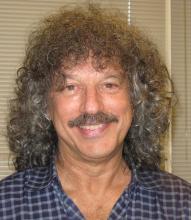 2009 Award Winner
Robert W. Levenson received his PhD from Vanderbilt and works in the areas of human psychophysiology and affective neuroscience, both of which involve studying the interplay between psychological and physiological processes. He heads the Berkeley Psychophysiology Laboratory Much of his work focuses on the nature of human emotion, in terms of its physiological manifestations, variations in emotion associated with age, gender, culture, and pathology, and the role emotion plays in interpersonal interactions.
Randolph Blake
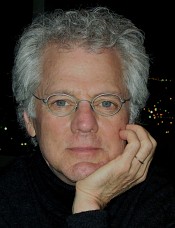 2007 Award Winner
Randolph Blake is Professor of Psychology Emeritus at Vanderbilt University. He served as Foreign Scholar at Seoul National University (2011-2015) and chaired Vanderbilt’s Psychology Department for eight years. Blake earned his PhD from Vanderbilt (1972) studying binocular vision, followed by NIMH postdoctoral training in neuroanatomy and neurophysiology at Baylor/UT. His research spans spatial vision, motion perception, binocular vision, perceptual organization, synesthesia, visual cognition, and auditory-visual interactions. His major honors include the Earl Sutherland Prize (2000), election to the American Academy of Arts and Sciences (2006), the Thomas Jefferson Award (2008), and election to the National Academy of Sciences (2012).