Kari Hoffman, Ph.D. Associate Professor of Psychology and Biomedical Engineering
 The Perception, Plasticity and Learning Lab
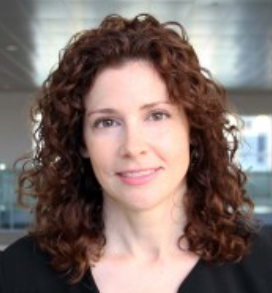
Kari Hoffman, Ph.D., Associate Professor of Psychology and Biomedical Engineering, Vanderbilt University
Kari Hoffman leads the Perception, Plasticity and Learning lab, investigating how neural circuits organize and adapt to build knowledge. Her research examines how memories manifest in brain activity and whether this activity can be intercepted or enhanced. Using multi-channel recording and stimulation in freely moving primates, she studies neural population dynamics during naturalistic behaviors mirroring real-world learning.
Hoffman and her lab combine high-density wireless ensemble recordings with computational modeling to understand how oscillatory brain activity supports adaptive behaviors like memory-guided exploration. Her work pioneered chronically implanted multi-electrode arrays enabling simultaneous recordings from hundreds of neurons in macaque monkeys, providing insight into neural circuit coordination during learning and memory formation.
Recent research focuses on sharp-wave ripples—the hippocampus’s most synchronized signals occurring during rest, functioning like neural “instant replays” of experiences. Her team demonstrates these ripples are enhanced near remembered visual objects and play critical roles in memory consolidation. They’ve shown how saccadic eye movements during visual exploration align hippocampal rhythms and modulate oscillatory activity brain-wide, revealing connections between active perception and memory formation.
A recent study examines how experience reorganizes content-specific memory traces in macaques, addressing how the brain forms new memories while preserving established ones. Recording from hippocampal neural ensembles in freely moving macaques, Hoffman’s team discovered how neural reorganization during experience persists into sleep, revealing mechanisms by which learning promotes memory formation without disrupting existing knowledge.
With a $3.8 million NIH BRAIN Initiative grant, Hoffman tests fundamental memory theory assumptions using immersive technologies and high-density recordings to understand how brain regions contribute to naturalistic memories. Her work has clinical relevance since the hippocampus and connected structures are first affected in Alzheimer’s disease. Understanding healthy memory circuits provides foundations for developing interventions for memory disorders and age-related cognitive decline.