11/13/25 H. Andrew Schwartz: Capturing Cognitive Styles and Thought Patterns with Discourse-level Large Language Models
 CCN brown bag
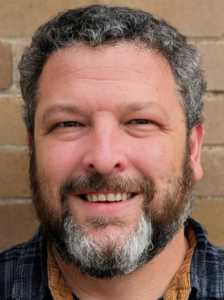
H. Andrew Schwartz
Associate Professor
College of Connected Computing
Date: Thursday, November 13, 2025
Time: 12:10- 1:00pm
Location: 316 Wilson Hall
Capturing Cognitive Styles and Thought Patterns with Discourse-level Large Language Models
While recent advances in natural language processing capture the meaning of written words in context, they fall short of capturing cognitive style exhibited by discourse relations–the unwritten patterns of thought and reasoning between phrases. In this talk, I outline new modeling approaches that move beyond predefined linguistic categories by embedding discourse relations in continuous semantic spaces, enabling models to capture more nuanced thought-patterns. I describe evaluations of such models in mental health and cognitive applications, including an experiment-based framework that predicts shifts in preference observed during a classical decision-making, constraint satisfaction task. Our approach detects markers of cognitive distortions and anxiety, such as causal reasoning patterns, dissonant expressions, and fortune-telling distortions. Together, results demonstrate that discourse-level language models can recover meaningful aspects of cognitive style with moderate-to-high accuracy and offer a scalable path for studying cognition through natural language.
Key Works:
Varadarajan, V., Mahwish, S., Liu, X., Buffolino, J., Luhmann, C., Boyd, R. L., & Schwartz, H. (2025). Capturing Human Cognitive Styles with Language: Towards an Experimental Evaluation Paradigm. In Proceedings of the 2025 Conference of the Nations of the Americas Chapter of the Association for Computational Linguistics (pp. 966-979).
Varadarajan, V., Lahnala, A., Vankudari, S., Raghavan, A., Feltman, S., Mahwish, S., … & Schwartz, H. A. (2025). Linking Language-based Distortion Detection to Mental Health Outcomes. In Proceedings of the 10th Workshop on Computational Linguistics and Clinical Psychology (CLPsych 2025) (pp. 62-68).
Building On:
Juhng, S., Matero, M., Varadarajan, V., Eichstaedt, J., Ganesan, A. V., & Schwartz, H. A. (2023). Discourse-level representations can improve prediction of degree of anxiety. In Proceedings of the 61st Annual Meeting of the Association for Computational Linguistics (pp. 1500-1511).
Son, Y., Varadarajan, V., & Schwartz, H. A. (2022). Discourse Relation Embeddings: Representing the Relations between Discourse Segments in Social Media. In Proceedings of the Workshop on Unimodal and Multimodal Induction of Linguistic Structures (UM-IoS) (pp. 45-55).
Varadarajan, V., Juhng, S., Mahwish, S., Liu, X., Luby, J., Luhmann, C., & Schwartz, H. A. (2023). Transfer and Active Learning for Dissonance Detection: Addressing the Rare-Class Challenge. In Proceedings of the 61st Annual Meeting of the Association for Computational Linguistics (pp. 11923-11936). Outstanding Paper Award.