Mark Wallace, PhD, Professor of Psychology and Dean, Graduate School
 Mark T. Wallace, Ph.D. Professor of Psychology and Dean, Graduate School, Vanderbilt University
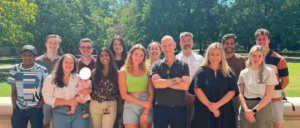
The Wallace Lab
Why do our senses often work better together than alone? How do sound, sight, and touch combine to shape behavior? And what happens when multisensory processing goes awry in autism, ADHD, or dyslexia?
The Wallace Lab investigates the brain’s remarkable ability to integrate information across senses. Using animal behavior, human psychophysics, EEG, fMRI, and neurophysiology, they study the neural and developmental bases of multisensory processing. Their work shows how sensory experiences interact to guide perception and action, and how disruptions in these processes contribute to clinical conditions.
Recent student-led projects include:
· Audiovisual integration in autism (Sarah Vassall), examining how children localize sounds when paired with conflicting visual cues.
· Motion perception across senses (Adam Tiesman), combining psychophysics, EEG, and modeling to reveal how attention shapes audiovisual motion integration.
· Cochlear implant outcomes (Ansley Kunnath), studying how multisensory integration and neuroplasticity influence speech recognition.
· Peripersonal space in autism (Hari Srinivasan), using VR/AR and motion capture to study how individuals perceive and interact with the space around their bodies.
The lab is also a founding site of the Multisensory Environments in Longitudinal Development (MELD) Consortium, an international collaboration with Yale, the Italian Institute of Technology, and Lausanne. MELD uses immersive, naturalistic tasks to chart multisensory development from infancy through young adulthood, aiming to link sensory processes
with higher-order cognition.
Through this integrative research, the Wallace Lab seeks not only to advance basic science but also to inform clinical practice and interventions. Trainees gain broad exposure to methods spanning animal models to brain imaging, while contributing to a collaborative and neurodiversity-affirming lab culture.