In Memoriam: Dr. Keith Clayton
Remembering our Colleague, Keith Clayton
We are deeply saddened to share the news of the passing of Keith Clayton.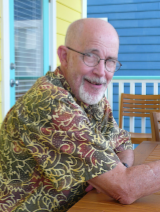
Keith Neil Clayton died peacefully in his sleep on December 18, 2024 in Nashville at the age of 90. He is survived by his children Norman, Elizabeth, and Ben, several grandchildren, and his former spouse Burneta Clore Clayton.
Keith was loved by all who knew him. He was generous, kind, and funny. He was a loving father and grandfather, mentor and colleague. He had a great interest in what makes us human, with an academic focus on learning and memory, which he turned into a fruitful career, and he had a rich spiritual life.
Keith was born in Coffeyville, Kansas on May 8, 1934. He was the first in his immediate family to earn a college degree. After receiving his Bachelors and Masters in Psychology from Southern Methodist University, he received his PhD in Psychology from Northwestern University.
Keith joined the faculty of the Department of Psychology in the fall of 1960 as a new assistant professor at just 26 years old. He quickly rose through the ranks, becoming full professor in 1970.
Like many psychologists of his generation, Keith was trained in animal behavior. Keith foresaw the importance of mechanistic computational modeling, being a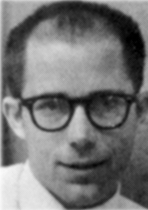 founding member of the Society for Mathematical Psychology, and embraced the paradigm shift from strict behaviorism to what came to be called cognitive science. He forcefully made the case that for our department to remain relevant within contemporary psychology, it must reshape its curriculum and hiring in the context of this new paradigm. Keith’s presence on our faculty during those nascent years was instrumental in our recruitment of an exceptionally strong cohort of young, rising stars in the field. Our department’s ascendance to distinction and its strength in cognition and computational modeling owe a lot to Keith’s vision and efforts over nearly four decades.
Keith published on a diverse array of topics such as mental imagery, color vision, learning and memory, and time series analyses. He was one of the first in our department to embrace and promote the use of computers in research, witnessing the development of computing from room-sized computers to the laptop. In the last decade of Keith’s career, he developed a strong interest in using nonlinear dynamics to understand the time course of cognition, being an early member and treasurer of The Society for Chaos Theory in Psychology & Life Sciences.
Keith was a consummate cheerleader for our department and its growth. A former department chair, Jum Nunnally, said that he imagined our department as a house with many windows, and when he looked at that house, he saw Keith’s enthusiastic face in most of its windows.
In reflecting on Keith’s influence, several senior faculty emphasized the important mentoring role that Keith played in their careers when they were junior faculty. One colleague shared some lessons learned from Keith: One was to anticipate who your reviewers are likely to be and to cite their articles. Another was the importance of experimental replication, especially of any phenomenon that you wanted to exploit or to explore in your own novel way. Our field might have avoided its “replication crises” if more people had followed Keith’s advice.
Keith retired in 1999 with the title of Professor Emeritus, but he didn’t retire from his involvement in the department. Until his health limited his mobility, he regularly attended seminars and talks. He was also responsible for collating, curating, and developing a narrative account of the history of the Department, developing a web site documenting our history in detail.
Keith took great care of his health. He was known to beat graduate students at racquetball well into his 50s. Some of us remember being young assistant professors in our 30s struggling to keep up with him on bike rides south of Nashville when he was well into his late 60s. Keith continued to pitch on the departmental intramural softball team until he was 70.
Keith had many interests. He enjoyed live music, painting, meditation, biking, computers, and racquetball. Keith supported many organizations financially and with his time, including the Nashville Symphony Orchestra, the Nashville Jazz Workshop, the Frist Museum, and Siddha Yoga Meditation. For many years he sang with a Nashville musical group called The Vincibles. The group wrote and performed humorous and upbeat songs about getting older. He also learned GarageBand, composed music, and recorded himself singing favorite tunes.
Keith was a mentor, colleague, and friend to many in our department and he will be dearly missed.