Past Fellows
Nathalie Barton

Assistant Professor of History, University of Notre Dame
Fellow from 2024-2026
During my fellowship, I began transforming my dissertation into a book manuscript and completed two articles. The first article, exploring conflicts between landlords and tenant in interwar Chicago, was published in the Journal of Urban History (forthcoming in print). The second, examining the politics of eviction in the 1970s, is forthcoming in Modern American History. I also organized a workshop with outside scholars where I presented revisions to my book manuscript in progress, tentatively titled The Terms of the Lease: Renting and the Making of Racial Inequality in the Modern American City. I additionally taught courses in the history department. Beginning in the fall of 2026, I’ll serve as Assistant Professor of History at the University of Notre Dame.
peter Chesney

Fellow from 2023-2026
Dr. Peter Sebastian Chesney has a Ph.D. from UCLA, where his history dissertation won the Norris Hundley Prize in 2021. He is a journeyman who has taught as a visiting professor in history, American studies, and the history of architecture. As a consultant, he has written reports that proved instrumental in the passage of California state housing law and New York City’s institution of a congestion pricing pilot. His areas of expertise include North American history, policy, mobility, the cultural model of disability, and public humanities. While at Vanderbilt, he published and lectured widely, appeared in a TV documentary broadcast in the European Union, designed a digital humanities experience for the computer science department, made a short documentary about the history of blindness, and debuted eight original olfactory art pieces at the Vanderbilt University Museum of Art.
Lee Ann Custer
 Department of Modern and Contemporary Art, National Gallery of Art
Fellow from 2022-2025
During my fellowship, I completed my book manuscript, Urban Air Modernism: Beyond the Skyscraper Aesthetic in New York, 1880–1940. I published related material in two articles on the artist John Sloan and his engagements with race and urban space in New York City in American Art and Panorama: Journal of the Association of Historians of American Art. I developed and taught new courses in the Department of History of Art and Architecture, including Art, Race, and Urban Space and Art and the Environment in the United States. I also spearheaded Vanderbilt’s membership as a consortium campus to the Urban Humanities Network (UHN)—an emerging professional organization that unites universities, practitioners, and researchers dedicated to interdisciplinary study within the urban humanities, and co-led UHN’s second global (Un)Conference hosted by Washington University in St. Louis.
Salem Elzway
 Assistant Professor of History, Florida State University
Fellow from 2025-2026
Salem Elzway is a historian of the twentieth century United States whose work engages the intersections of labor, politics, and Science, Technology, and Society (STS). His in-progress book will provide the first scholarly history of the industrial robot, and traces the entanglements of automation, artificial intelligence (AI) and robotics, and the political economy of American industrial policy during and after the Cold War. Three commissioned pieces from Salem’s broader research program have recently been published: first, in a special issue of Osiris on the history of algorithms; second, in a co-authored essay for a special issue of Labor: Studies in Working-Class History on the intersections of labor and science; and third, in a tri-authored piece for the American Historical Review on new approaches to the American welfare state. He has provided background and analysis on the history and contemporary politics of automation for Fortune and the Wall Street Journal, and has also been featured on KPFA’s nationally broadcast radio program Against the Grain. Salem’s work has been supported by the Charles Babbage Institute, the Hagley Museum and Library, the Jefferson Scholars Foundation at the University of Virginia, and the Smithsonian Institution. He has a BSBA in Finance from the University of Nebraska and received a PhD in History from the University of Michigan.
Eric Moses Gurevitch
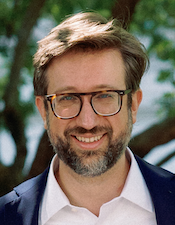 History of Science, Harvard University
Fellow from 2022-2025
As a Collaborative Humanities Postdoctoral Fellow, Gurevitch worked on transforming his dissertation into a monograph for publication. He actively contributed to programming in the Environmental Humanities and Science and Technology Studies at the Robert Penn Warren Center for the Humanities. And he taught courses in the Asian Studies Department and the History Department.
Anna Hill
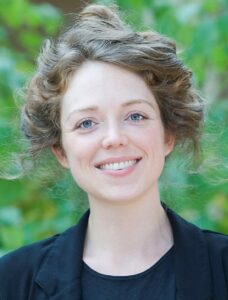 English, Clemson University
Fellow from 2023-2025
Anna Hill’s research and teaching focus on twentieth- and twenty-first-century literature, with a particular emphasis on literature of the United States, environmental criticism, memory studies, postcolonial/decolonial studies, and visual culture. Her current book project explores how authors reworked major genres of the American novel and tropes of environmental writing at the end of the twentieth century in light of emergent discourses about new socioenvironmental crises. This project makes the case that, as a dynamic vehicle of place-based, more-than-human memory, the realist novel offers a generative resource for environmental imagining in the Anthropocene. She received her Ph.D. from Yale University, where she was awarded the Janice Carlisle Prize for Excellence in Teaching.
Following her time at Vanderbilt, Hill joined the Clemson English department. In addition to her research, she is interested in public scholarship and creative collaborations, particularly involving literature, visual arts, and the interdisciplinary environmental humanities.
Jonathan Karp
 Lecturer, Columbia University
Fellow from 2023-2026
Jonathan Karp is a scholar of American Studies, media, and performance. His research asks how people improvise forms of media to order narratives of everyday life thrown into chaos by racial violence. His book project, Performances of Aftermath, investigates the 1917 East St. Louis massacre to show how collective racial violence becomes known: hidden in the everyday in a project of white supremacy or wrenched out by those fighting for redress. At Vanderbilt, Jonathan taught courses in the Program in Culture, Advocacy, and Leadership, including “How to Skip Class” and “Riots and Rebellions.”
Brittany Landorf
 Visiting Assistant Professor of Religion, Carleton College
Fellow from 2025-2026
During my fellowship, I began revising my dissertation into a book manuscript, completed one article, and submitted an edited volume for publication. My book project, Maddening Saints: Debating Orthodoxy and Defining Mental Illness in North African Islam, asks: “How did a sixteenth-century mad saint (majdhūb) come to signify correct religious practice and doctrine in North Africa today?” In writing a genealogy of the mad saint, I explore the creative synthesis of Islamic medical understandings of the self with defenses of mystical experiences. I also presented in the Science, Technology, and Society workshop at the RPW center and taught one course in the Religion Department. Beginning in the fall of 2026, I will serve as a Visiting Assistant Professor of Religion at Carleton College.
Helen Makhdoumian
 American Council of Learned Societies (ACLS) Fellow, Visiting Scholar at Vanderbilt
Fellow from 2023-2026
I focus on aesthetic representations of colonial violence and its legacies in two regions: North America and the Middle East. To that end, I employ practices of relational thinking. That is, I theorize witnessing events of colonial violence and witnessing the structures which remain afterwards by juxtaposing diverse literary canons and taking up interdisciplinary scholarship. At stake in my manner of knowledge production is rupturing resilient area studies silos that prevent us from seeing commonalities refracted across different places. A full list of my publications can be found here, recordings of my recent public lectures can be found here and here, and a newsletter feature about what I am up to at Vanderbilt University can be found here.
As a Collaborative Humanities Postdoctoral Program Fellow, I worked on two projects. First, Afterwords: Nested Memories and the Forms of Global Indigenous Removals is a book project of literary history and theory. I illuminate how descendants of the dispossessed turn to literary production to bring to public consciousness the legacies of Indigenous removal in disparate geographies: Native North America, Palestine, and Armenia. The commonalities I reveal cover both content and form. In my analysis and interpretation of contemporary literary texts, I attend to depictions of removal from land, from kinship networks, from national imaginary, and from futurity. I treat the American Indian, First Nations, Palestinian American, and Armenian American authors whose works I take up as theorists who occupy the position of witness to the legacies of removal in their respective community’s cases. I also give name to these authors’ reliance on nested narratives. I call that repeated narrative form “nested memory.” I then use my theory of nested memory to explore a thematic afterword in each body chapter. By thematic afterword, I mean what these authors have taught readers all along to see about the reverberations of removal history both for the nation-state and for these diasporic communities.
My ways of worlding American studies inform my second book project, Parallel Lives: The Making of the American Nation Through Distant Witnessing. I use the notion of parallel lives to reveal how narratives of witnessing trauma but at a physical remove have undergirded American literary and print culture production. Once again drawing on Indigenous and diasporic texts, I show how the forms, objects, and spaces of mediation define the United States as a transnational space of encounter among and between Natives, settlers, and diasporic Others.
I take up and model relational thinking in my pedagogy, too. Many of my courses feature juxtapositions of Indigenous, diasporic, American, and Anglophone literatures. I often integrate print culture items, historical documents, art, or oral histories, among other cultural artifacts for analysis. Students thus read and interpret different cultural objects in relation.
Elvira Aballí Morell
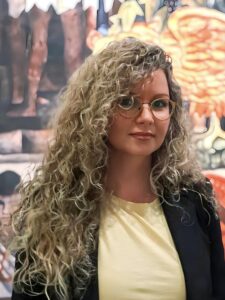 Department of Spanish & Portuguese, Princeton University
Fellow from 2022-2024
During my CHPP fellowship, I published the peer-reviewed article “De cimarrones: Raza y disidencia en Autobiografía de Juan Francisco Manzano” in Cuban Studies (2022). I also developed my book manuscript, Who Is Afraid of Sikán?, which examines Cuban and Latinx cultural production through the lens of the Abakuá Society, an all-male Afro-Cuban religious confraternity. Centered on Sikán, a foundational figure condemned for revealing sacred knowledge within the Abakuá tradition, the project analyzes how women artists reimagine this myth to challenge patriarchy and recover suppressed matrilineal genealogies.
In parallel with this research, I led community-engaged workshops in collaboration with colleagues from Tennessee State University and local artists. These workshops created spaces for Nashville’s Hispanic and Latinx communities to engage cultural memory through collective readings, creative writing, and art. I also collaborated with Dean Andre Churchwell and the Nashville Public Library on a panel series, Then and Now: The History of Minority Communities in Nashville. This commitment to community engagement was recognized with the Postdoctoral Service Award from Vanderbilt’s Office of Postdoctoral Affairs.
Lara Lookabaugh
 Librarian & Curator for Latin American, Iberian, & Latinx Studies, Vanderbilt University
Fellow from 2023-2024
While a CHPP fellow, I worked on several publications and collaborative endeavors including an accepted article entitled “Elsewhen Among the Elderberries: Gendered infrastructures of home and migration in a Mam Maya town” in Environment & Planning D: Society & Space and “Mapping Karen Parker’s Journal: Student archival interpretation as feminist geographic worldmaking pedagogy” with Banu Gökarıksel and Sarah Carrier in Journal of Historical Geography, 88 (June 2025): 146-156. My editorial collective, Desirable Futures, published two special issues and prepared an edited volume for the University of Georgia Press: About Time: The Politics and Poetics of Desirable Futures.
Since leaving the CHPP program, I am still working on my research projects. My collaborative book project is now under review with advanced contract with UGA, and I have recently submitted a photo essay for you are here: the journal of creative geography that was coauthored with my research collaborators in Guatemala. As the Librarian and Curator for Latin American, Iberian, and Latinx Studies at Vanderbilt Libraries, I teach classes around information literacy, finding and selecting sources for Latin American Studies, and ethics and politics of archives and citation practices. I also curate the library’s book and manuscript collections in these areas, collaborating with our vendors from across Latin America, the Caribbean, and the Iberian Peninsula to select materials to support teaching and research interests at Vanderbilt.
Lidiana de Moraes
 University Honors Program, Florida State University
Fellow from 2022-2025
Dr. Moraes holds a Ph.D. in Literary, Cultural, and Linguistic Studies from the University of Miami, which encompasses the interdisciplinary scope of her work. Her academic pursuits extend to examining the development of social movements in the Americas observed through the lens of cultural production. During her time in the program, she offered courses such as “Conceptualizing Social Justice,” “Music is Power!” and “Afro-Diasporic Legacies.” Lidiana’s research contributions can be found in various scholarly publications and languages, including the Journal of Lusophone Studies, Revista Diadorim, and the edited volume Narrativas del Miedo: Terror en Obras Literarias, Cinemáticas y Televisivas de Latinoamérica.
Ana Luiza Morais Soares
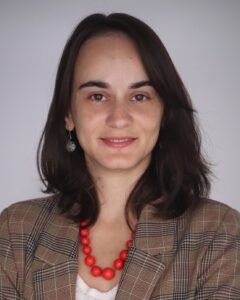
Department of Africana, Afro-Brazilian, and Indigenous Studies, Federal University of Ouro Petro, Brazil
Fellow from 2022-2025
During my CHPP fellowship, I worked on the project Invisible Urbanisms: Indigenous Urban Experiences, which examined the historical and contemporary presence of Indigenous peoples in urban spaces, challenging narratives that render them invisible or “out of place.” Drawing on my training as a historical anthropologist, I focused on how processes of Indigenous child separation and labor exploitation in the Brazilian Amazon contributed to long-term forms of ethnic erasure that continue to shape urban Indigenous experiences today. The project also explored how Indigenous communities are using digital and social media platforms to reclaim visibility, assert belonging, and rearticulate Indigenous identities within modern urban and digital landscapes.
I am currently an Assistant Professor in the Department of Africana, Afro-Brazilian, and Indigenous Studies at the Federal University of Ouro Preto. In this role, I am developing my book project, Kunhãtãi Nation: Indigenous Children in the Amazon, advising undergraduate and graduate students, and coordinating research initiatives focused on Indigenous history in Minas Gerais, Brazil, supported by national and international grants.
Laboratório de Pesquisa Caminhos Indígenas
James Pilgrim
 Art History, University of Illinois
Fellow from 2022-2023
I was fortunate to be part of the initial cohort of CHPP fellows at Vanderbilt. I divided my time between teaching, organizing programs for the environmental humanities cluster overseen by Prof. Teresa Goddu, and my own research.
My first book, Pastoral’s End: Art, Ecology, and Catastrophe in Renaissance Italy, which was my main research focus while at Vanderbilt, will be published by the University of Chicago Press in the summer of 2026.
Matthew Plishka
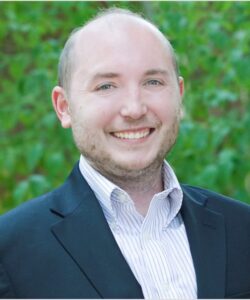 Environmental History/Humanities, Visiting Assistant Professor of Environmental Studies at Amherst College
Fellow from 2022 to 2025
During my time at Vanderbilt, I developed my book project Battling Banana Blight, which is now under advance contract with the University of North Carolina Press’ Flows, Exchanges, and Migrations series. The book tells the story of how ecological crisis, in the form of the banana-crop-killing fungus known as Panama Disease, reshaped agricultural modernization in late-Colonial Jamaica (1910-1960). As part of my work at Vanderbilt, I published several articles on the topic, which can be found in Agricultural History, Environment and History, and Arcadia. I also developed several courses including History of Environmental Law and Environmental Justice in Latin America and the Caribbean.
nat rivkin
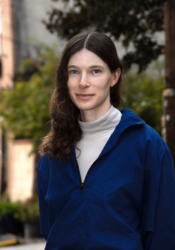 Visiting Assistant Professor of English, Haverford College
Fellow from 2025-2026
Throughout the fellowship, I worked on revising my dissertation into a book manuscript, tentatively titled Trans Rhetorics. I also published an article, “‘Nevermore a Manly Shape Retaine’: Francis Beaumont’s Salmacis and Hermaphroditus, Fairness, Trans Femininity c. 1602,” in a special issue of College Literature on “Trans Literatures.” During the spring semester, I taught an introductory writing seminar titled “Good Girls Gone Bad: Milton to Miley.” In the fall of 2026, I will begin a position as a Visiting Assistant Professor of English at Haverford College.
Jesús Ruiz
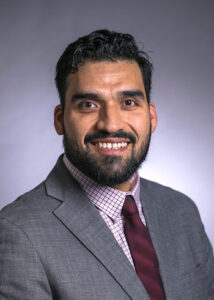 Caribbean & Latin American Studies & History, Vanderbilt University
Fellow from 2022-2024
During my CHPP fellowship, I primarily focused on developing a book proposal that has since evolved into my first scholarly monograph, now under contract with Harvard University Press. The project—The Black Royalists: Haiti and A Politics of Freedom in the Atlantic World—examines how Afro-Catholic royalism shaped the revolutionary politics of Haiti’s revolutionaries. In addition, I designed new courses on Migration and Borders that allowed me to begin refining the questions guiding my second research project, a hybrid and interdisciplinary exploration of three generations of U.S. immigration enforcement history, informed by my experience as a former Asylum Officer for the federal government.
Since completing the fellowship, I’ve been fortunate to continue expanding both my scholarly and community work. I was appointed Faculty Head of Moore College (2025) and Assistant Professor of the Practice in Caribbean Studies at Vanderbilt University’s Center for Latin American, Caribbean, and Latinx Studies (2024), with an affiliation in the Program in Culture, Advocacy, and Leadership. My article, “Freedom, Faith & Sovereignty: The 1796 Boca Nigua Revolt as an Afro-Catholic Royalist Rebellion,” was published in Slavery & Abolition: A Journal of Slave and Post-Slave Studies (Vol. 46, No. 1). I also received several institutional grants, including the Provost’s Faculty Grant for Voices of Belonging: Latinx Student Experiences at Vanderbilt and the Big Questions and Community Engagement Collaboration Funds for Caribbean Week: Bridging Cultures, Celebrating Diasporas, and Inspiring Connections. This provided funding for the inaugural Caribbean Week at Vanderbilt University, and for which I direct a newly approved Caribbean Studies Minor in the College of Arts & Sciences. In 2024, I was honored with the Maestrx Award for Outstanding Faculty Support of Latinx Students.
Anna Tybinko
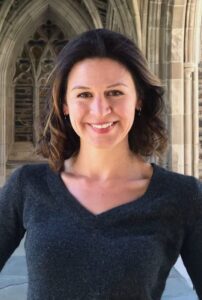 Department of Spanish, Colby College
Fellow from 2022-2024
Prior to coming to Vanderbilt, Dr. Anna Tybinko was the John Hope Franklin Postdoctoral Research Associate in the Franklin Humanities Institute’s From Slavery to Freedom Lab at Duke University, where she also received her doctorate in Romance Studies. She specialized in Migration and Border Studies in the Iberian world. Her research on questions of race, racialization, and “bordering” in Spanish cities was supported by the National Endowment for the Humanities, the Andrew W. Mellon Foundation, and the American Council for Learned Societies. She published in Studies in Twentieth and Twenty-First Century Literatures, contributed essays to the edited collections Twenty-First Century Arab and African Diasporas in Spain, Portugal and Latin America (Routledge, 2022) and Migrants Shaping Europe, Past and Present: Multilingual Literatures, Arts, and Cultures (Manchester University Press, 2022), was co-editor of Migrant Frontiers: Race and Mobility in the Luso-Hispanic World (Liverpool University Press, 2023), and was developing her monograph, Urban Borderlands: Contesting Racial Boundaries in Contemporary Spain. At Colby, she teaches courses on modern and contemporary cultures of Spain and Global Hispanophone countries.
Clara Wilch

Fellow from 2024-2026
Clara Wilch researches how ecology and performance interrelate with a focus on philosophical and creative approaches to understanding and confronting climate change. Her current book project illuminates the climatic influences of “icescapes,” performances that stage encounters between humans and ice, and centers contemporary icescapes of Inuit Nunaat and the circumpolar Arctic. Her publications illuminate the creation of material and social infrastructures while attending to intertwined histories of environmental change, colonialism, economics, and gender. In her teaching, research, and public humanities collaborations, she strives to interweave methods and insights from the humanities, arts, and sciences to support environmental justice and reconceive multispecies relations.
At Vanderbilt, she designed and taught courses for the Program in Communication of Science and Technology and the Department of English and was affiliated with the Program for Climate and Environmental Studies.
Arctic Representation: Conversations with Inuit Artists
Three-Part Mini Series Podcast; Program Announcement